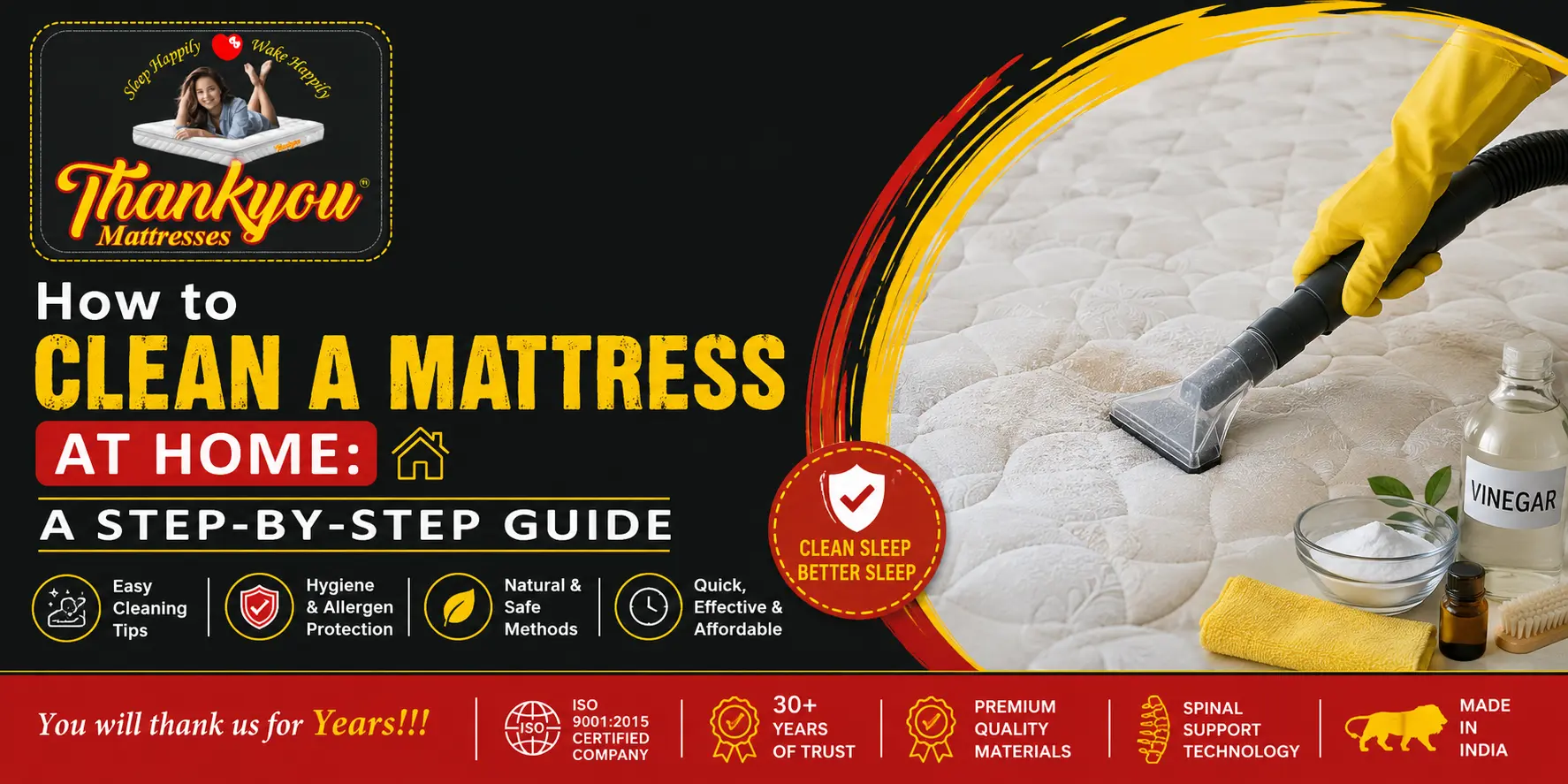
Here’s something you’ll probably only start thinking about once you’ve stripped the bed to discover its secrets. Sheets, towels and bedding are washed and changed regularly; floors are cleaned with vacuum cleaners and counters with a wet cloth, while mattresses remain unattended for decades. And it is definitely a flaw because mattress fabric silently absorbs perspiration, dust, skin cells and all sorts of dirt that somehow manage to penetrate through the sheets.
If you’re wondering how to clean a mattress without damaging it, you’ve come to the right place. In this guide, we will describe how to make the job easy to do – all you need are your hands and some products you probably have around your house.
Why Bother Cleaning a Mattress You Can’t Even See Under the Sheets?
Fair question. But consider this: a mattress you sleep on for 7-8 hours a night, every night, is bound to pick up more grime than almost anything else in your house.
A few reasons it’s worth the effort:
- Dust mites feel good about their environment in the mattress fabric. Allergy sufferers will experience sneezing and itchy eyes due to the presence of these tiny insects.
- Moisture of sweat accumulates for years and gives the perfect breeding ground to bacteria and other microorganisms causing odors.
- Stains are not easily removed from the mattress fabric, and eventually they become permanent.
- In case of neglect, the mattress will wear out faster and will be unable to provide comfortable sleep.
None of this means you need to deep-clean every weekend. A little consistency is all it takes.
The Actual Cleaning Process
Start by stripping everything off
Toss the bed sheets, pillow covers, and even the mattress cover into a hot wash cycle, to remove the dust mites and bacteria which have been multiplying in the fabric which touches your skin daily.
Vacuum like you mean it
Grab the upholstery attachment and go over the whole surface slowly. Don’t rush the edges and seams — that’s usually where the most dust collects, and it’s the part people skip. If your mattress can be flipped, do both sides while you’re at it.
Deal with stains before they become permanent
Fresh spill? Blot it immediately with a dry cloth — don’t rub, since that just pushes the liquid deeper into the padding. For stains that have already dried in, a few home remedies work surprisingly well:
- A paste of baking soda and a splash of water, left on the stain for 15-20 minutes before wiping away, handles most everyday marks.
- A drop of mild dish soap in water is gentle enough for sweat stains and won’t damage most fabric covers.
- For stubborn stains like blood, a mix of hydrogen peroxide and baking soda tends to do the trick — just test a small hidden patch first to be safe.
Let baking soda pull out the smell
This is the step people are often surprised by. Sprinkle baking soda generously across the whole mattress and just leave it — ideally overnight. It absorbs moisture and odour while you sleep elsewhere (or on the sofa, just for one night). Vacuum it off in the morning and you’ll notice the difference immediately.
Give it some sunlight if you can
If you live in a flat, then that might not be practical but if there’s a balcony or some space by a window where sunlight shines, prop the mattress upright for about two hours, as sunlight is a disinfectant.
Protect it going forward
Once it’s clean, don’t skip this part — get a breathable, waterproof mattress protector on it. It’s a small investment that saves you from repeating this entire process every few weeks.
If You Own an Orthopedic Mattress
These are built differently — layered foam designed to support your spine — so cleaning them the same way you’d clean an old spring mattress isn’t a great idea.
A few things worth keeping in mind:
- Do not wash it at all. The water seeps into the foam layers of the mattress and weakens it. The point of using an orthopedic mattress is lost.
- Spot-clean when necessary and use as little water as possible.
- Dry it completely – meaning dry it till there is no trace of moisture left in it. Otherwise there will be mold growing within the mattress.
- Rotate the mattress every few months if you can.
Cleaning a Baby Mattress Needs a Gentler Hand
This task is a bit different in nature since here you aren’t simply cleaning your mattress but the thing that will be in direct contact with delicate skin of a baby for hours.
- Use only environmentally friendly and unscented products. Smell of chemicals, which won’t bother grown-ups, may actually irritate a baby.
- Clean up spills right away and don’t let them accumulate; baby’s mattresses get stained much more often than adult ones do.
- Covering your baby mattress with a waterproof case from the very beginning will save you a lot of trouble.
- Always air dry your mattress in a well ventilated area before using it again.
- Make sure to learn recommendations of the producer; many manufacturers offer covers that can be removed and washed in a washing machine.
A Simple Routine to Stick To
You don’t need a strict schedule, but a loose rhythm helps:
- Vacuum roughly every two weeks
- Deep clean with baking soda once a month
- Rotate or flip every 3 months
- Do a proper stain check and wash the protector every couple of months
Why the Mattress You Buy Matters Just as Much
Here’s the thing — no amount of cleaning fully compensates for a poorly made mattress. Affordable products absorb humidity, accumulate odor, and deteriorate quickly despite any maintenance efforts. This makes it reasonable to be selective concerning where to buy. Several established mattress manufacturers in Delhi now use breathable, moisture-resistant fabrics specifically because they know how much difference it makes to everyday upkeep — whether you’re buying an orthopedic mattress for back pain or a baby mattress for a nursery.
An example of such a product line is the Thankyou Mattress that creates mattresses that really are easy to take care of rather than requiring constant pampering.
Wrapping Up
Cleaning a mattress isn’t glamorous work, but it’s not complicated either. Strip it, vacuum it, treat the stains, let baking soda do its quiet magic, and get some sunlight on it when you can. If you’ve got an orthopedic mattress, go easy on the moisture. If it’s a baby’s mattress, go easy on the chemicals. Pair good habits with a mattress that’s actually built to last, and you’ll spend a lot less time worrying about hygiene — and a lot more time actually sleeping well.
Frequently Asked Questions
- How often should I clean my mattress?
Vacuum it every two weeks and do a deep clean with baking soda once a month to keep dust and odours under control.
- Can I wash my mattress with water?
Avoid soaking it in water; instead, use spot cleaning with mild solutions and let it dry completely to prevent mould.
- How do I remove sweat stains from a mattress?
Blot the area with a mild dish soap solution, then wipe with a damp cloth and let it air-dry fully before use.
- What is the best way to deodorise a mattress?
Sprinkle baking soda over the surface, leave it for a few hours or overnight, then vacuum it off thoroughly.
- How do I clean an orthopedic mattress without damaging it?
Stick to spot cleaning with minimal moisture, avoid deep soaking, and let it dry fully before placing sheets back on.
- Is it safe to use regular detergent on a baby mattress?
No, use fragrance-free, non-toxic cleaners only, since baby skin is sensitive to harsh chemicals and strong scents.
- How can I prevent future stains on my mattress?
Use a waterproof, breathable mattress protector to shield against spills, sweat, and dust build-up.
- Does sunlight help in cleaning a mattress?
Yes, sun exposure helps kill bacteria and dries out moisture naturally, leaving the mattress fresher and odour-free.
- How long does a mattress take to dry after cleaning?
Depending on humidity, it can take a few hours to a full day; always ensure it’s completely dry before use.
- Should I flip or rotate my mattress regularly?
Yes, rotating your mattress every three months (if the design allows) helps maintain even support and extends its lifespan.
Leave a Reply