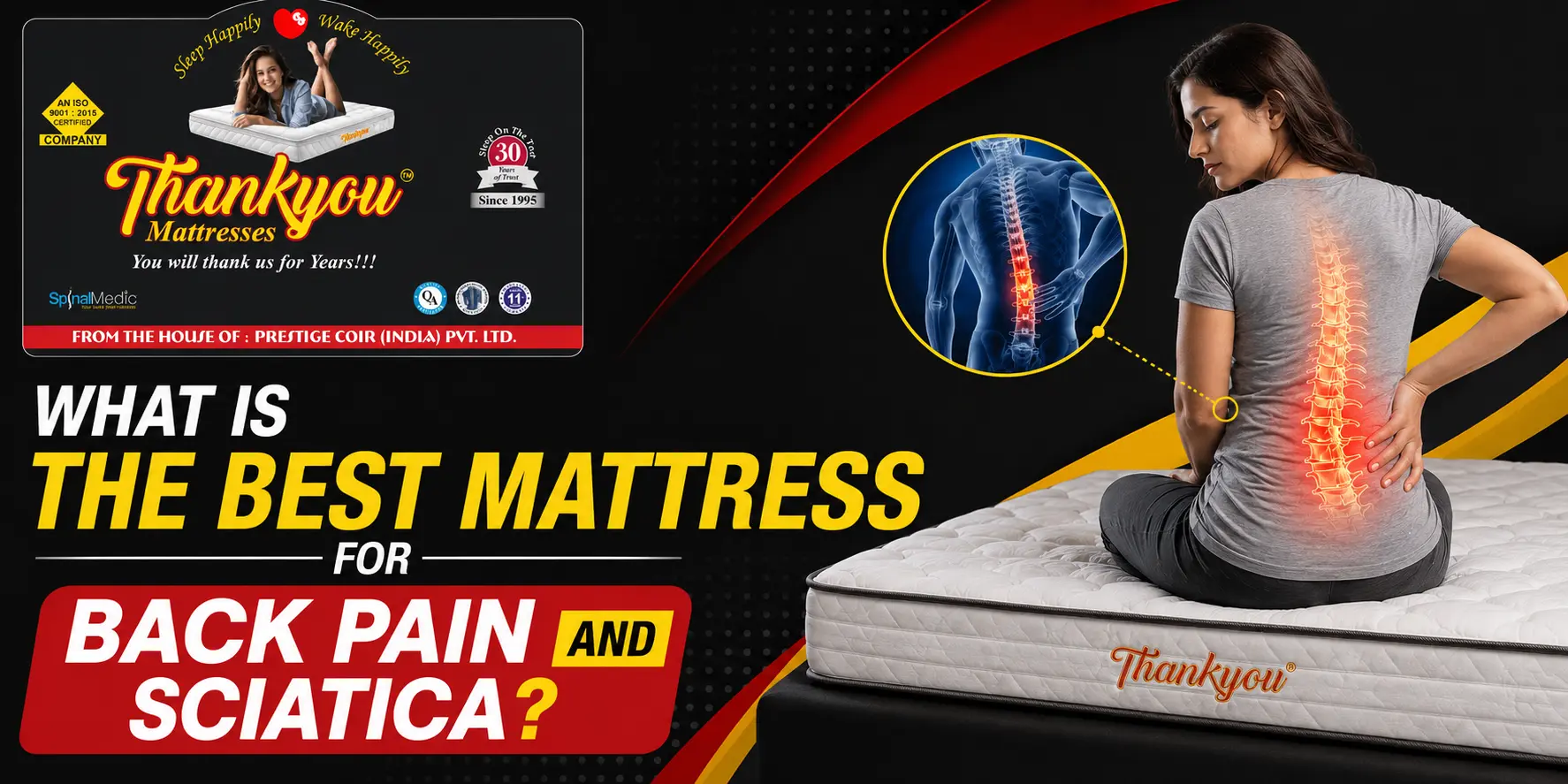
Getting out of bed with a sore back or a sudden shooting pain in the legs is not a pleasant experience. If you are struggling with back pains or sciatica, your mattress might be contributing to the problem more than you think. A poorly constructed bed or one that is too soft will have your spinal alignment out of place and nerve compression worsened by morning.
Choosing the best mattress for back pain is not all about getting the firmiest or softest bed on the shelf; the secret lies in selecting one that strikes the perfect balance between support and relief. This guide provides you with the information you need to know in order to choose the best sleeping arrangements for you.
Why Your Mattress Matters for Back Pain and Sciatica
Sciatica refers to compression and irritation of the sciatic nerve, which extends from your lower back into the hips and legs. Poor sleep posture is the most common (yet often disregarded) cause.
In case you have an excessively soft mattress, your hips and shoulders will be too sunken, causing misalignment of your spine. In case of a mattress that’s too hard, it won’t match your body contours and put pressure on your shoulders, hips, and lower back. Any of these factors may cause irritation of your nerves and muscles.
The goal is a surface that:
- Keeps your spine in a neutral, straight line from head to heel
- Cushions pressure points without letting you sink too far
- Reduces motion transfer so muscles can fully relax overnight
- Supports healthy blood circulation during sleep
Key Features to Look for in a Mattress for Back Pain
1. Medium-Firm Support
Numerous researches and recommendations made by physiotherapists have found the most suitable mattresses for people suffering from lower back pain – those with medium-firm firmness. Such mattresses provide necessary suppleness and support.
2. Zoned or Contouring Support
Zoned support systems of some mattresses ensure that more support is provided for heavy body areas (shoulders and hips), while other areas remain comfortable.
3. High-Density Memory Foam or Hybrid Construction
The memory foam layer responds to body heat and pressure by conforming to your back’s natural curves. The hybrid mattress comprises a comfortable foam layer on top of a supportive spring foundation, making it an ideal solution if you need contouring without sacrificing support.
4. Breathable, Durable Materials
Your sleep quality suffers when you feel too hot. Get a mattress that allows air flow in addition to having open cell foams that control temperatures.
5. Motion Isolation
You may want a mattress that absorbs motion to avoid being disturbed by your partner’s movements when sharing a bed, especially if you’re suffering from pain.
Sleep Position and Back Pain: What to Know
- Side sleepers normally require a somewhat softer surface that will provide cushioning to the hips and shoulders but won’t allow the spine to bend.
- Back sleepers require a medium level of firmness in order to preserve the natural shape of the lumbar area without sinking too much into the mattress.
- Stomach sleepers will need to find a firmer mattress that won’t make them bend at the waist area, thus, exacerbating sciatica pain.
No matter what sleeping position you choose, the proper combination of the mattress and the pillow in terms of height and firmness will ensure the alignment of the neck and spine.
Which Mattress Type Actually Suits Back Pain and Sciatica?
If you are in search of a direct answer instead of just theoretical information, here is how the most popular mattress types fare when it comes to back pain:
- High-density rebonded foam (firm/orthopedic type): Most ideal for individuals who require an extremely firm surface that holds the spine in its natural straight position – commonly prescribed for cases involving problems in the back vertebrae and larger body types.
- Layered memory foam (medium-firm/contouring type):Ideal for those requiring a combination of a supportive base with a soft top layer that alleviates shoulder and hip pressures while still ensuring spine support.
- Coir or spring-based options: Works fine for general use but lack the targeted support for the spine provided by the foam-based orthopedic constructions.
Best choice for actual cases of sciatica and lower back pain, due to the fact that foam-based mattresses provide better support than conventional coir or open spring constructions which sag.
A Real Example: The Adonis Ortho Bondo
Of all the products available under Thankyou brand, the Adonis Ortho Bondo is especially crafted as an orthopedic one. This particular mattress is made from high density rebonded foam with jacquard quilted cover and is intended to provide a rigid sleeping surface.
This construction is meant to give the back vertebrae consistent, even support through the night — which is exactly the kind of surface that helps reduce the spinal misalignment behind chronic back pain and sciatic flare-ups. It’s a good fit for people who currently sleep on a soft or sagging mattress and need a firmer reset, including those on the heavier side who need more structural support.
However, if you need a mattress that will be a little bit softer, yet will provide the same orthopedic properties, there is another product – Memory Foam Series (Comforto, Elegance, and Luxury models). In contrast to the previous one, this series includes rebonded or high resilience foam under the layer of memory foam. The contouring provided by this model exceeds the Ortho Bondo.
Beyond the Mattress: Building a Pain-Friendly Sleep Setup
A good mattress takes most of the load, but the remaining sleep components are also important.
- Pillow choice: The use of contour memory foam pillow, like the one called Memory Contour Pillow, will ensure the proper curvature of the neck and shoulder area, thus providing relief from tension spreading throughout your upper back. Pure cotton pillow will give you additional breathability and chemical-free experience.
- Mattress protectors: Ensuring cleanliness and moisture-free condition of your mattress increases its ability to provide necessary support.
- Sleep hygiene: Maintaining regular sleep schedule, avoiding excessive screen time before sleeping and light stretches can also complement support that your mattress gives.
It’s also worth noting that spinal support needs start early in life. Just as adults need proper alignment, infants benefit from a firm, breathable baby mattress — like the Baby Crib Mattresses designed for safe, healthy spinal development from day one — a good reminder that mattress quality matters at every life stage, not just for adults managing pain.
Final Thoughts
Of course, there is no one perfect mattress for all back pains sufferers – your optimal mattress depends on body weight, sleeping position and specific type of your pain. However, a combination of medium firmness and zoning with high-quality foam and hybrid materials will work best when it comes to proper spinal alignment and pressure reduction. In addition, you can complement it with supportive pillow creating an environment that will help to relieve your pain and not to aggravate it.
If mornings with stiffness and nerve pain have become routine for you, maybe it’s time to stop relying on the comfort of pillow-top mattresses and think about what your spine really needs to heal during nights. There are a lot of options of mattresses designed specifically for that purpose – Adonis Ortho Bondo or Thankyou Memory Foam Series can be considered as an example.
Frequently Asked Questions
- What firmness level is best for back pain and sciatica?
A medium-firm mattress is generally best, as it supports spinal alignment while still cushioning pressure points at the hips and shoulders.
- Can a mattress alone cure sciatica?
No, but the right mattress reduces nerve irritation during sleep and supports recovery alongside medical treatment or physiotherapy.
- Is memory foam good for back pain?
Yes, high-density memory foam contours to the spine’s natural curve, distributing weight evenly and easing pressure points.
- Should side sleepers use a softer or firmer mattress?
Side sleepers usually need a slightly softer surface to cushion the shoulders and hips while keeping the spine straight.
- How often should I replace my mattress for back health?
Most mattresses lose adequate support after 7–8 years, which can worsen back pain if not replaced.
- Does pillow choice affect back pain?
Yes, a contour memory foam pillow keeps the neck aligned with the spine, reducing strain that can extend into the upper back.
- Are hybrid mattresses better than all-foam for sciatica?
Hybrid mattresses offer both contouring comfort and firmer coil support, making them a strong option for people needing extra structural support.
- Can sleeping position worsen sciatica?
Yes, stomach sleeping often arches the lower back and can intensify sciatic nerve compression compared to side or back sleeping.
- Is a firm mattress always better for back pain?
Not necessarily; overly firm mattresses can create pressure points, while medium-firm options balance support and cushioning better.
- Do infants need special mattress support too?
Yes, a firm, breathable baby mattress supports safe spinal development and reduces suffocation risk during infant sleep.
Leave a Reply