Category: pure cotton pillow

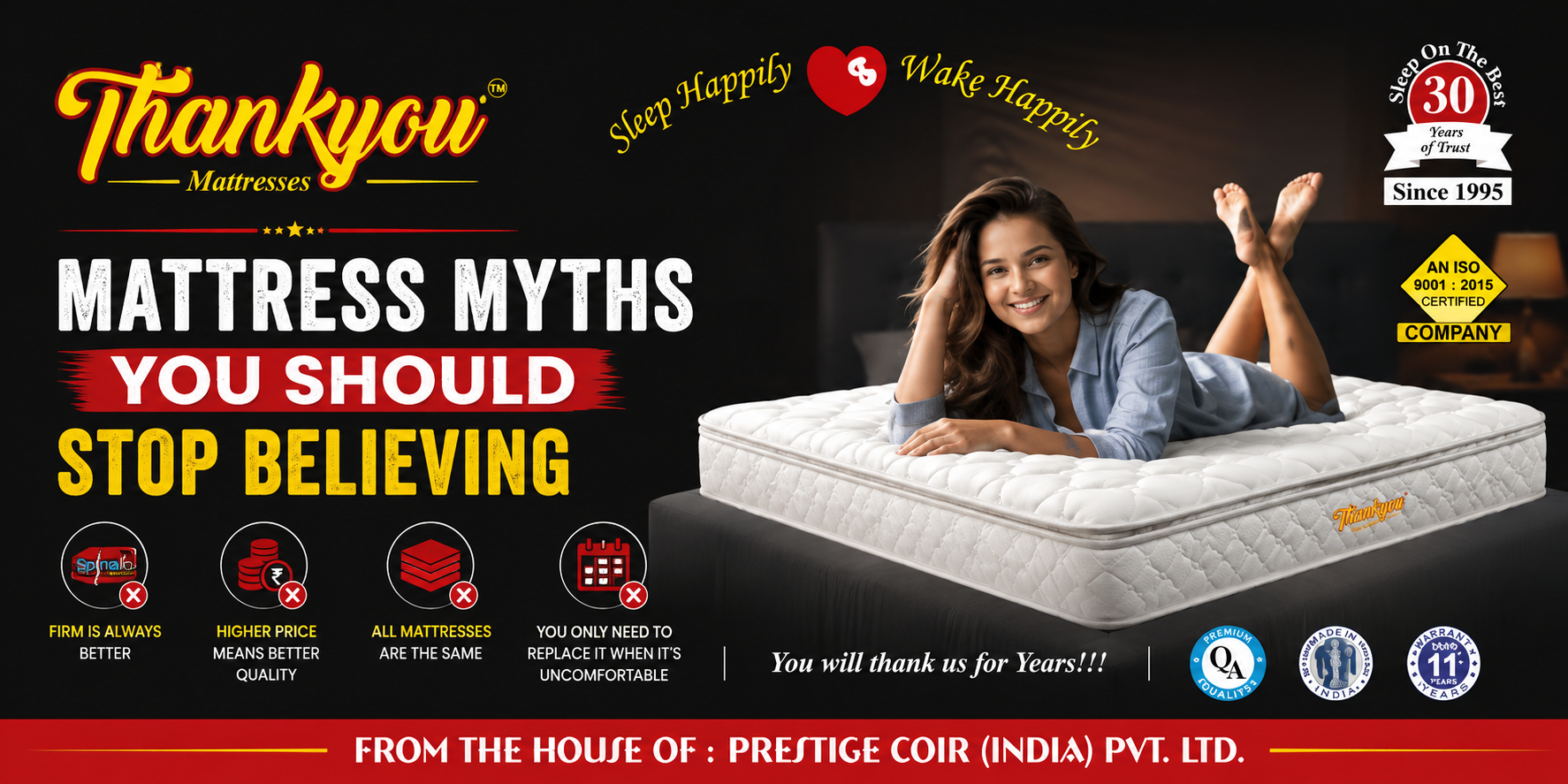
  • Mattress Myths You Should Stop Believing

    Mattress Myths You Should Stop Believing

    Ask five people what makes a “good” mattress and you’ll probably get five different answers — most of them wrong. Mattress advice in India gets passed around like a family recipe: from parents, from the uncle who swears by his 20-year-old cotton-filled bed, from the salesman who just wants to close a sale before lunch. Somewhere along the way, a lot of half-truths hardened into “facts.”

    We’re Thankyou Mattresses, and honestly, we’d rather you buy the right mattress from anywhere than the wrong one from us. So here’s a rundown of the myths we hear most often, and what’s actually true.

    “Harder is always better for your back”

    This one refuses to die. Somehow an entire generation grew up believing that if a mattress doesn’t feel like sleeping on a plank of wood, it’s not doing its job.

    Here’s the problem: a mattress that’s too firm doesn’t support your spine — it just pushes back against it. Your shoulders and hips, being the widest parts of your body, end up taking all the pressure while the rest of you barely touches the surface. Over time that’s a recipe for stiffness, not relief.

    What your spine actually wants is something closer to medium-firm — support that still holds its shape but gives a little where your body needs it to. That’s part of why contour memory foam pillow designs caught on the way they did. Instead of forcing your neck to adjust to the pillow, the pillow adjusts to your neck.

    “One mattress is pretty much like another”

    It’s tempting to think mattresses are interchangeable once they’re covered in the same white fabric. They’re not, and the difference usually isn’t visible from the outside. A few things that actually separate a decent mattress from a mediocre one:

    • What’s inside — foam, latex, springs, or some hybrid mix of all three
    • How the layers are built, since that’s what determines whether it lasts five years or fifteen
    • How well it breathes, especially if you tend to sleep warm
    • Edge support, which matters more than people expect if you sit on the bed a lot

    This is also where it helps to know who actually made your mattress. Some of the more established mattress manufacturers in Delhi have been refining their layering and foam density for years — it’s not something you can shortcut by copying a design and slapping on a new label.

    “The more expensive it is, the better it must be”

    Not really. Price tags in this category are heavily influenced by advertising budgets, showroom rent, and brand positioning — not always by what’s inside the mattress. We’ve seen premium-priced mattresses that are, frankly, unremarkable, and mid-range ones that outperform them on every measurable front.

    If you want a better filter than price, look at the warranty length, the return or trial policy, and whether the brand is upfront about the materials used. That tells you more than a number on a tag ever will.

    “You’ll know it’s time to replace it when it looks worn out”

    By the time a mattress visibly sags, it’s usually been failing you quietly for a year or two already. Most mattresses have a realistic lifespan of 7 to 10 years, and the decline is gradual — you wake up a little stiffer, you shift positions more at night, you blame it on stress or your pillow. Rarely do people connect it back to the mattress itself until it’s obviously falling apart.

    If you’re waking up with aches that ease up once you’re out of bed and moving around, that’s usually your mattress talking, not your body.

    “The pillow doesn’t matter much, as long as the mattress is good”

    The mattress gets all the credit, but your neck and shoulders don’t care how good your mattress is if your pillow is flat, lumpy, or trapping heat all night. This is one area where a pure cotton pillow earns its reputation — breathable, low on synthetic buildup, and generally kinder to people with allergies or sensitive skin. Get the mattress right and ignore the pillow, and you’ve really only solved half the problem.

    “Memory foam always sleeps hot”

    Fair complaint, outdated by now. Early memory foam did trap heat — that reputation wasn’t invented out of nowhere. But foam manufacturing has moved on quite a bit since then. Gel-infused layers, open-cell structures, better airflow channels — a lot of modern foam is built specifically to stop that heat-trapping problem, so judging it by decade-old standards isn’t really fair anymore.

    “Everyone in the house can share the same type of mattress”

    Convenient in theory, rarely true in practice. A side sleeper needs more give at the shoulder and hip. A back sleeper usually wants firmer, more even support. Throw in differences in body weight and age, and “one mattress fits all” starts to look more like a compromise everyone tolerates than a solution anyone’s happy with.

    “Five minutes in a showroom tells you everything”

    It really doesn’t. Lying on a mattress for a few minutes under showroom lighting, fully dressed, mid-afternoon, tells you almost nothing about how it’ll feel at 3 a.m. after a long day. Your body needs a few nights — sometimes a couple of weeks — to actually settle in and reveal whether a mattress works for you. That’s exactly why trial periods exist, and why skipping straight to a decision in-store is one of the more common regrets we hear about.

    The takeaway

    Most mattress myths survive simply because nobody questions them — they get repeated often enough that they start to sound like common sense. But your spine, your sleep, and your budget deserve better than inherited assumptions. Look past the marketing, ask about materials, take advantage of trial periods, and pick what actually works for your body — not what everyone else says worked for theirs.

    FAQs

    1. Is a firm mattress really better for back pain?

     Not always — a medium-firm mattress usually supports the spine better than an overly hard one, which can create pressure points at the hips and shoulders.

    1. How long does a mattress actually last?

     Around 7 to 10 years on average, though support quality often declines gradually before any visible wear shows up.

    1. Does a higher price always mean a better mattress?

     No — price is often driven by marketing and branding, so warranty terms and material quality are better indicators of value.

    1. Does memory foam still sleep hot?

     Not as much as it used to. Newer foam designs use gel infusions and open-cell structures that significantly improve airflow.

    1. Can one mattress work for every family member?

     Not really — sleeping position, body weight, and age all affect what firmness level actually feels comfortable and supportive.

    1. How important is the pillow compared to the mattress?

     Just as important. A poor pillow can undo the neck and shoulder support that a good mattress provides.

    1. What’s the benefit of a pure cotton pillow?

     It’s breathable, low-allergen, and generally more comfortable for people who sleep warm or have sensitive skin.

    1. How can I tell if a mattress is good quality?

     Check the core material, layering, breathability, and edge support rather than relying on how it looks or feels for a few minutes.

    1. Why do mattress trial periods matter?

     Because it takes several nights for your body to properly adjust, a short showroom test can’t predict long-term comfort.

    1. What should I look for in a mattress manufacturer?

     Look for established manufacturers with clear certifications, consistent quality control, and transparent warranty policies.


  • 7 Health Benefits of Sleeping on a Pure Cotton Pillow You Didn’t Know About

    7 Health Benefits of Sleeping on a Pure Cotton Pillow You Didn’t Know About

    Your pillow does a lot more than just cradle your head at night. The material it’s made of quietly shapes how well you breathe, sweat, sleep — and even how your skin feels in the morning.

    We spend nearly a third of our lives asleep, yet most of us give very little thought to what our face and neck are resting against for all those hours. While mattress firmness and pillow loft get plenty of attention, the fabric covering your pillow is often overlooked — even though it has a direct and measurable effect on your health.

    A pure cotton pillow, made from natural fibres rather than synthetic blends, offers a range of benefits that go well beyond simple comfort. Here’s what the science — and a little common sense — says about why making the switch is worth your while.

    7 Reasons a Pure Cotton Pillow Is Better for Your Health

    01 Superior Breathability
    Cotton fibres are naturally hollow and allow air to circulate freely. This keeps your pillow cool through the night, preventing the heat build-up that disrupts deep sleep stages.
    02 Moisture Management
    Cotton absorbs up to 20% of its weight in moisture without feeling wet. It wicks sweat away from the skin and allows it to evaporate, keeping your face dry and comfortable all night.
    03 Hypoallergenic by Nature
    Organic and tightly woven cotton is naturally resistant to dust mites, mould, and pet dander — the most common indoor allergens. Ideal for those with asthma, eczema, or rhinitis.
    04 Gentler on Skin
    The smooth, soft texture of cotton creates less friction on your face than synthetic fabrics. Less friction means fewer compression wrinkles and reduced irritation for sensitive or acne-prone skin.
    05 Chemical-Free Comfort
    High-quality cotton pillows are free from the off-gassing associated with memory foam fills and synthetic covers, making them a cleaner choice for those sensitive to VOCs or chemical smells.
    06 Durability That Pays Off
    Cotton holds its structural integrity through repeated washing at higher temperatures, allowing thorough sanitisation without degrading the fabric — important for hygiene-conscious sleepers.
    07 Supports Consistent Sleep Temperature
    By regulating surface temperature throughout the night, cotton helps the body maintain its natural circadian rhythm — particularly valuable for children, the elderly, and hot sleepers.

    Why the Right Support Matters As Much As the Cover

    A cotton cover does its best work when the pillow inside is equally well-designed. This is where fill material plays a significant role in neck and spinal health. A contour memory foam pillow with a cotton cover is one of the most effective combinations available today — the foam provides zone-specific support for the cervical spine, while the cotton breathes and stays fresh against your skin.

    Unlike traditional flat pillows, a contour memory foam pillow is shaped to fill the gap between the shoulder and the head when sleeping on your side, and provides a lower profile for back sleepers. Paired with a pure cotton cover, it addresses both structural support and surface comfort in one product.

    If you’ve been dealing with neck stiffness, interrupted sleep from overheating, or morning skin irritation, switching to a breathable cotton-covered contour pillow may address several concerns at once — without requiring changes to anything else in your routine.

    What About Babies and Young Children?

    Parents choosing a baby mattress rightly pay close attention to materials — firmness for safe sleep positions, waterproofing for hygiene, and chemical safety for delicate skin. The same logic applies to pillow covers. Cotton’s breathability and low-allergen properties make it particularly suitable for young children, whose skin and respiratory systems are more sensitive to synthetic materials and trapped moisture.

    For children transitioning from a crib to a toddler or junior bed, a cotton-covered, appropriately sized pillow ensures continuity of the safe, breathable sleep environment a quality baby mattress was designed to provide from the start.

    How to Care for a Cotton Pillow

    One of cotton’s most underappreciated advantages is how easy it is to clean. Cotton pillowcases and covers tolerate warm or hot machine washes, which are effective at killing dust mites and removing allergen build-up. Aim to wash your pillowcase at least once a week and the pillow itself every three to six months. A well-maintained cotton pillow can last several years without losing its hygiene or structural integrity.

    Making a Considered Choice

    Sleep quality is the foundation of physical and mental wellbeing — and the materials surrounding you while you sleep are not trivial. A pure cotton pillow is not a luxury upgrade; it’s a sensible, science-backed choice that addresses temperature regulation, allergen control, skin health, and ease of maintenance all at once.

    At Thankyou Mattresses, the emphasis on thoughtfully chosen materials extends from mattresses to sleep accessories — because every layer of your sleep environment works together. Whether you’re pairing cotton with a contour memory foam pillow for better neck support or simply replacing an old synthetic cover, the investment in natural materials is one that pays out quietly, every single night.


    Frequently Asked Questions

    Q1 Is a pure cotton pillow better than a synthetic one for sleep?
    Yes — cotton’s natural breathability and moisture-wicking properties keep the sleep surface cooler and drier, which promotes deeper, less interrupted sleep compared to most synthetic alternatives.
    Q2 Can a cotton pillow help with skin issues like acne or eczema?
    Cotton’s soft texture reduces friction on the face and its breathability minimises moisture build-up, both of which help reduce irritation — making it a gentler choice for sensitive or acne-prone skin.
    Q3 Are cotton pillows hypoallergenic?
    Tightly woven, organic cotton naturally resists dust mites and mould growth, making it one of the better choices for people with allergies, asthma, or hay fever.
    Q4 What is a contour memory foam pillow and who should use it?
    A contour memory foam pillow has an ergonomically shaped profile that supports the natural curve of the neck. It’s particularly beneficial for side sleepers and those with chronic neck or shoulder pain.
    Q5 How often should I wash a cotton pillow?
    Wash your cotton pillowcase at least once a week. The pillow itself should be washed every three to six months at a warm temperature to effectively remove allergens and maintain hygiene.
    Q6 Is cotton safe for a baby’s pillow or mattress cover?
    Yes. Cotton is one of the safest materials for infants and toddlers because it is free from harsh chemicals, breathable enough to prevent overheating, and gentle on delicate skin.
    Q7 Do cotton pillows help with night sweats?
    Cotton’s moisture-wicking capability absorbs perspiration and allows it to evaporate quickly, keeping the sleep surface drier and more comfortable for people who experience night sweats.
    Q8 What is the difference between a cotton pillowcase and a pure cotton pillow?
    A cotton pillowcase is just the cover; a pure cotton pillow refers to one with a cotton fill or outer shell. The greatest health benefits come from the cover in contact with your skin, but cotton fill also adds breathability.
    Q9 Can the right pillow really improve sleep quality?
    Yes — a pillow that keeps you cool, supports spinal alignment, and doesn’t trigger allergies directly reduces the micro-awakenings that fragment sleep and leave you feeling unrested in the morning.
    Q10 How long does a good quality cotton pillow last?
    With regular washing and proper care, a quality cotton pillow typically lasts two to three years before losing loft and support. Replacing it at that point helps maintain both comfort and hygiene.
  • Pure Cotton Pillow vs Memory Foam Pillow: Which One is Better?

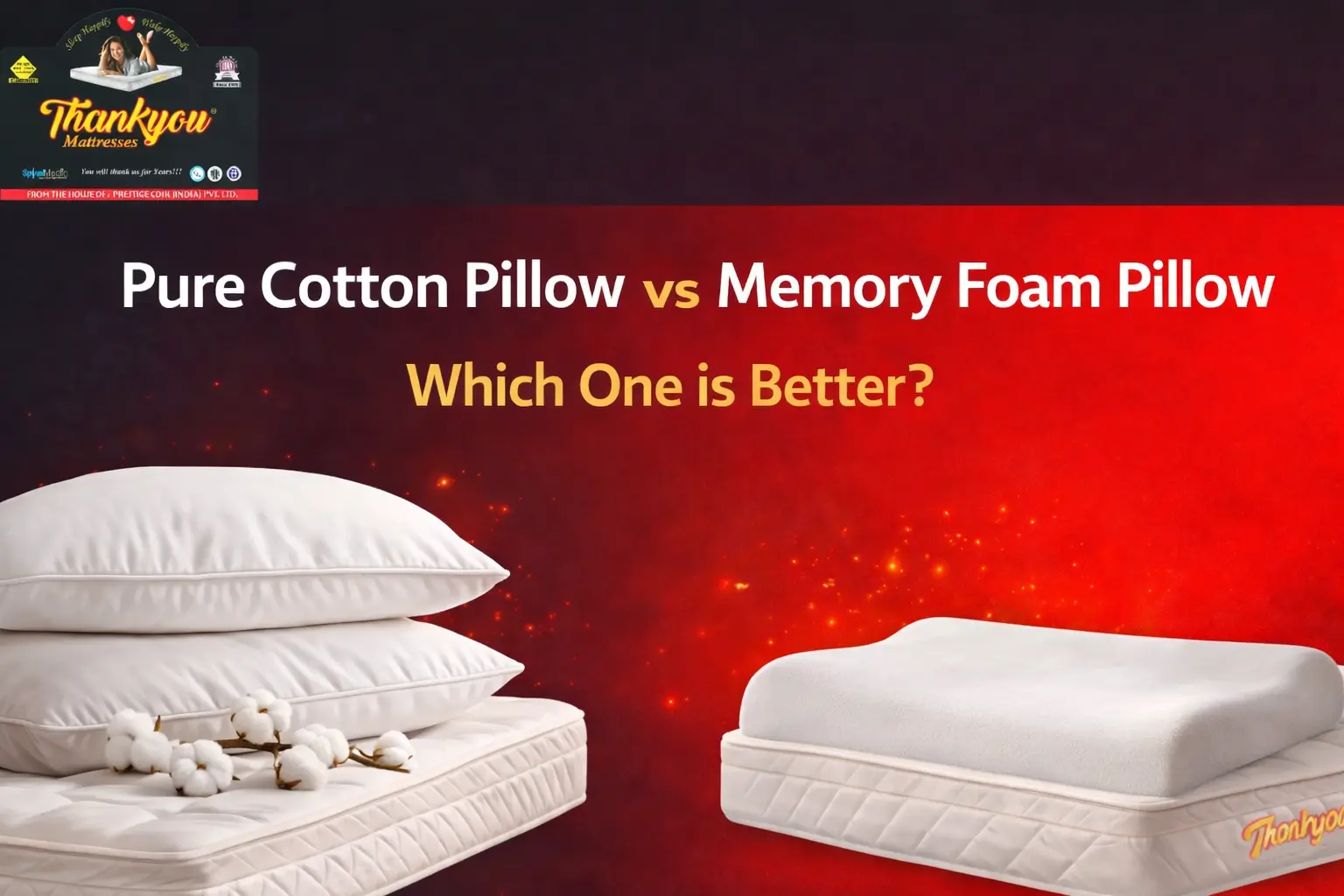
    Pure Cotton Pillow vs Memory Foam Pillow: Which One is Better?

    A pillow is very important in the maintenance of the quality of sleep and the support of the neck and spine. Although people concentrate their attention on the selection of the appropriate mattress, the selection of the appropriate pillow is as important as the selection of the appropriate mattress for a comfortable sleeping experience. Two types of pillows that have gained popularity in the market include the Pure Cotton Pillow and the Memory Foam Pillow.

    This guide will help us understand the difference between these two types of pillow covers.

    Why Choosing the Right Pillow Matters

    Your pillow is the support for your head, neck, and spine during the entire period of sleep. An improper selection of the pillow can cause discomfort during the period of sleep.

    A proper pillow should:

    • Maintain the correct position of the neck 
    • Provide comfort for your sleeping position 
    • Offer breathability and durability 
    • Give the appropriate level of support during long hours of uninterrupted sleep 

    By understanding the difference in the pillow materials, one can make a better decision.

    What is a Pure Cotton Pillow?

    Pure Cotton Pillow is made from the raw materials of cotton either as a cover or as a filling. Cotton has been used as a raw material for pillow covers and pillow fillings for several generations because of its softness and comfort.

    Key Features of Cotton Pillows

    • Natural Material
      Cotton is a raw material that is used as a pillow filling because of its softness. 
    • Breathable and Cool
      Cotton is breathable, which makes the pillow cool while sleeping. 
    • Lightweight and Flexible
      These types of pillows can be adjusted according to the head and sleeping position. 
    • Skin-Friendly
      Cotton is also good for sensitive skin as it does not irritate the skin. 

    Because of these characteristics, many people prefer cotton pillows for comfortable sleep.

    What is a Memory Foam Pillow?

    A Memory Foam Pillow consists of a unique type of foam that adjusts to body temperature and pressure. The pillow conforms to the shape of your head and neck for customized support.

    Key Features of Memory Foam Pillows

    • Contour Support
      The Memory Foam Pillows conform to the shape of your neck and head for customized support. 
    • Pressure Relief
      The Memory Foam Pillows distribute weight evenly for pressure relief. 
    • Durability
      These pillows are able to retain their shape for a longer period. 
    • Consistent Support
      Once the shape is molded, the pillow is able to offer support throughout the night. 

    For this reason, memory foam pillows are recommended for use by individuals who need support for their neck or spine.

    Pure Cotton Pillow vs Memory Foam Pillow

    Both pillows have their unique benefits, and the choice will always depend on your needs.

    1. Comfort and Feel

    Cotton pillows offer a fluffy feel, and this is what many people look for in a pillow. They offer a traditional pillow experience, and this is what many people are accustomed to.

    Memory foam pillows, on the other hand, offer a firmer feel, and this is what many people look for in a pillow.

    2. Breathability and Temperature

    Cotton is breathable and allows air to pass through easily. Therefore, it is recommended for those who tend to sleep hot to use a Pure Cotton Pillow.

    Memory foam pillows are also known to retain heat, although some designs have been made to ensure proper air circulation.

    3. Support for Neck and Spine

    Memory foam is also known to provide proper orthopedic support. A memory foam pillow ensures proper neck alignment.

    Cotton pillows provide moderate support but may tend to flatten after some time, thus requiring proper fluffing.

    4. Durability

    Memory foam pillows are known to last for a long time since memory foam maintains its shape.

    Cotton pillows may compress after some use, but they may still be comfortable.

    5. Maintenance

    Cotton pillows are easy to maintain and keep clean. Cotton pillowcases are washable, thus keeping the pillow clean.

    Memory foam pillows are hard to clean since memory foam should not be soaked in water.

    Which Pillow is Better for Different Sleepers?

    Different sleeping styles may require different kinds of pillows.

    Side Sleepers

    Side sleepers often require firmer support for the neck. A memory foam pillow may help maintain proper alignment.

    Back Sleepers

    Back sleepers can use either option. A moderately supportive cotton pillow or a contoured memory foam pillow may both work well.

    Stomach Sleepers

    Stomach sleepers require softer and flatter pillows, making cotton pillows suitable for this type of sleeper.

    How Pillows Work Together with the Right Mattress

    The pillow and mattress are used in tandem to provide the perfect sleeping experience. Even if you have the best pillow, it may not provide the perfect comfort if your mattress does not provide proper support for your body.

    Many experts recommend choosing bedding products from reputed mattress manufacturers in delhi that provide comfort, durability, and ergonomics for proper sleeping. When you use a pillow and mattress in tandem, it provides proper posture and improves your sleeping experience.

    Tips for Choosing the Right Pillow

    Before choosing your pillow, you should consider the following:

    • Sleeping Position –  Pillows for side, back, or stomach sleepers may vary in their need for support. 
    • Material Preference – Natural softness or contour support. 
    • Temperature Comfort – Pillows that breathe well will ensure that you do not get too hot. 
    • Durability – Pillows that retain their shape will ensure that you get maximum comfort. 
    • Maintenance – Pillows that are easy to clean and maintain are essential for hygiene. 

    Final Thoughts

    Cotton and foam pillows are equally beneficial in their own ways, depending on your personal sleeping style and preferences. The Pure Cotton Pillow is perfect for those who prefer to use natural materials for their bedding, whereas the Memory Foam Pillow is perfect for those who need extra neck support.

    Ultimately, it is up to you to choose the right pillow for your personal sleeping style, comfort, and support requirements. High-quality bedding products from reputable companies like Thankyou Mattresses are available to provide you with maximum comfort for a sound sleep.