Tag: contour memory foam pillow

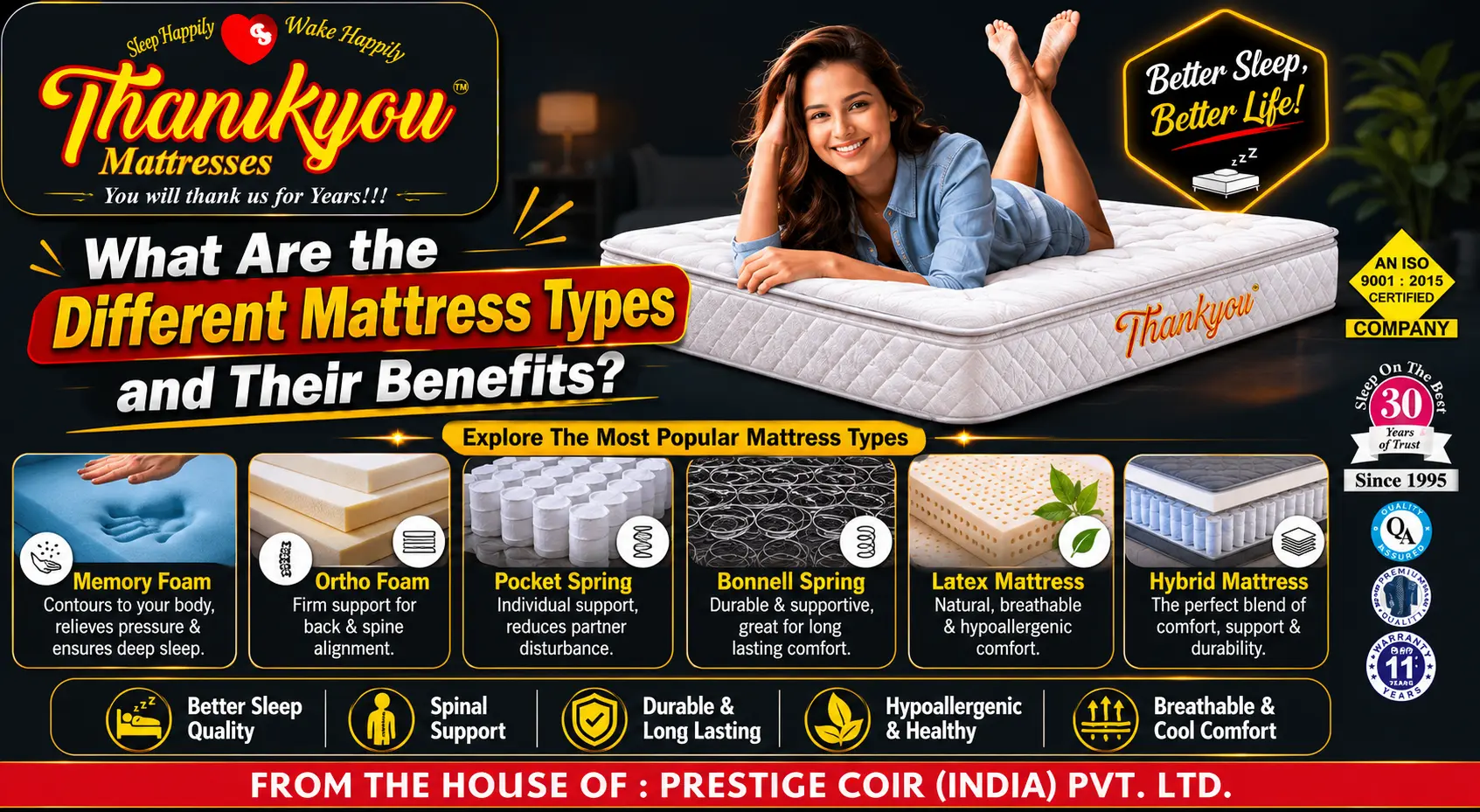
  • What Are the Different Mattress Types and Their Benefits?

    What Are the Different Mattress Types and Their Benefits?

    Most people spend about a third of their life asleep. And yet, when it comes to buying a mattress, the average person spends less time researching it than they would a new phone. That’s a bit of a problem.

    The mattress market has exploded over the last decade. Walk into any store — or open any browser tab — and you’re immediately hit with terms like “memory foam,” “pocketed coils,” “latex,” “hybrid,” and half a dozen others. It can feel like you need a degree just to buy something to sleep on.

    You don’t. But you do need to know the basics. Here’s a straightforward breakdown of the main mattress types, what each one actually does, and who it works best for.

    1. Innerspring — The Classic That Still Works

    Innerspring mattresses have been around for well over a century, and there’s a reason they haven’t disappeared. They work. A network of steel coils forms the core, giving the mattress its structure and bounce.

    They’re not glamorous. But for a lot of sleepers — especially those who find foam mattresses suffocating or too soft — an innerspring is exactly what they need.

    What makes them worth considering:

    • They sleep cool. Air moves freely between the coils, so you don’t overheat the way you might on a solid foam mattress.
    • They’re firm and responsive — you sit on top of them rather than sinking in.
    • Edge support is usually strong, which matters if you share a bed or tend to sleep near the side.
    • Generally more affordable than foam or hybrid options.

    If you sleep on your stomach or your back, and you’ve always felt more comfortable on a firmer surface, an innerspring mattress probably suits you well. Side sleepers, however, often find them a bit unforgiving on the shoulders and hips.

    2. Memory Foam — Loved by Millions for a Reason

    Memory foam was originally developed for NASA aircraft seats — which is a fun fact that manufacturers have been happily repeating ever since. But beyond the origin story, the material genuinely delivers something different from traditional mattresses.

    It responds to your body heat and weight, slowly contouring around you. That pressure relief is what makes it so popular among people with joint pain, shoulder issues, or anyone who’s tried everything else and still wakes up stiff.

    The real advantages:

    • Pressure relief is exceptional. It distributes your weight so no single point — shoulder, hip, lower back — bears too much load.
    • It absorbs motion brilliantly. If your partner tosses and turns, you probably won’t feel it on a good memory foam mattress.
    • It contours closely to the body, which side sleepers in particular tend to love.
    • High-density versions are quite durable and hold their shape for years.

    One thing worth pairing with a memory foam mattress: a contour memory foam pillow. The idea is that your mattress supports your spine from the waist down, but if your pillow doesn’t support your neck properly, you’re still going to wake up with stiffness. A contour memory foam pillow keeps the cervical spine aligned through the night — particularly useful if you deal with neck pain or wake up with headaches.

    The common complaint about memory foam is heat retention. Traditional memory foam traps body heat, which can make summer nights uncomfortable. Gel-infused versions (more on that below) address this fairly well.

    3. Latex — The One That Outlasts Everything Else

    Latex mattresses don’t get as much attention as memory foam, but among people who’ve slept on one for years, there’s often genuine loyalty. Natural latex comes from rubber tree sap, making it one of the more eco-friendly options in the market.

    The feel is different from foam — it’s bouncy and responsive rather than slow-sinking. You don’t feel “stuck” in a latex mattress the way some people do with memory foam.

    Worth knowing:

    • Naturally resistant to dust mites, mould, and allergens — a genuine advantage for people with allergies or asthma.
    • Breathes well, so temperature regulation is better than most foam options.
    • Exceptionally durable. A quality natural latex mattress can last 15 to 20 years with reasonable care.
    • Responsive and supportive without the deep sink of memory foam — often preferred by those who find memory foam “too slow.”

    The downside is cost. Good latex mattresses are not cheap, and synthetic latex (which is more affordable) doesn’t quite match the natural version in breathability or lifespan. But if you’re buying once and want it to last, the investment often makes sense.

    4. Hybrid — When You Can’t Decide (and Don’t Have To)

    Hybrid mattresses exist because a lot of people want more than one thing from their mattress. They want the support of coils but the comfort of foam. Or the bounce of springs but with better motion isolation. A hybrid is, at its core, a practical compromise — and for many sleepers, it’s the best answer.

    The typical construction is a coil support layer at the base with foam, latex, or gel layers on top. The specifics vary a lot between brands, so what you actually get depends heavily on the quality and thickness of those comfort layers.

    Where hybrids genuinely shine:

    • More versatile than any single-material mattress — works across sleeping positions.
    • Better airflow than all-foam, so they sleep cooler.
    • Good edge support from the coil base, plus pressure relief from the foam layers above.
    • Suits couples who have different sleeping preferences or body types.

    If you’ve been going back and forth between foam and spring and can’t quite commit, a hybrid is worth trying. The price is usually mid-to-high range, but you’re effectively getting a more complete product.

    5. Orthopedic Mattresses — Built Around Your Back

    The term “orthopedic” gets used loosely in mattress marketing, but a genuinely orthopedic mattress is designed with spinal alignment as the priority. Firmer than average, with materials arranged to support the natural curve of the spine without letting it collapse or strain.

    If you have chronic lower back pain, this category deserves serious attention.

    The functional benefits:

    • Keeps the spine in neutral alignment through the night — which is the single most important thing a mattress can do for back pain sufferers.
    • Firm enough to prevent the sagging that misaligns the spine on softer mattresses.
    • Often recommended by physiotherapists, especially post-injury or for people with degenerative disc issues.
    • Tends to be well-suited for heavier individuals who need consistent support.

    One thing to keep in mind: “firm” doesn’t always mean “orthopedic,” and “orthopedic” doesn’t mean it’ll feel uncomfortable. The goal is proper support, not punishment. The right orthopedic mattress should feel well-supported, not like sleeping on the floor.

    6. Baby Mattresses — This One Requires Extra Care

    This is where the rules change completely. Everything that makes an adult mattress comfortable — plushness, softness, contouring — is either irrelevant or actively unsafe for an infant.

    Newborns and young babies cannot reposition themselves if they end up face-down on a soft surface. That’s why every pediatric and sleep safety guideline is consistent on this point: a baby mattress must be firm, flat, and snug-fitting within its cot or crib.

    What to actually look for:

    • Firmness first — no exceptions. The mattress should not compress more than an inch when pressed firmly.
    • Breathable materials that prevent heat buildup, which is linked to safer sleep outcomes.
    • A waterproof or easily cleanable cover — non-negotiable for hygiene, especially in the first year.
    • Non-toxic materials. Babies breathe close to the mattress surface for many hours a day, so chemical-free construction matters.
    • Precise sizing — the mattress should fit the cot frame with no gap larger than two fingers on any side.

    Parents should ignore marketing language that emphasises softness or comfort features for babies. Safety certifications and material transparency are the only things that genuinely matter when buying a baby mattress.

    7. Gel Foam — Memory Foam’s Cooler Sibling

    Gel foam is essentially memory foam with a heat problem solved. Gel beads or gel layers are incorporated into the foam structure to draw heat away from the body rather than trapping it.

    If you love the feel of memory foam but always found yourself kicking off the covers at 2am, gel foam is worth a look.

    What it offers:

    • Noticeably cooler than traditional memory foam — the gel actively pulls heat away from the sleeping surface.
    • Retains all the pressure-relieving and motion-isolating qualities of standard memory foam.
    • A good middle ground for hot sleepers who still want the contouring feel of foam.

    The gap between gel foam and latex in terms of breathability is narrowing with newer constructions. For India’s climate specifically, gel foam or latex are worth prioritising over standard memory foam.

    So, How Do You Actually Choose?

    Honestly? Start with your sleeping position and your biggest complaint about your current mattress. That narrows it down faster than anything else.

    • Waking up with back pain → look at orthopedic or medium-firm hybrid options.
    • Disturbing your partner (or being disturbed) → memory foam or gel foam for motion isolation.
    • Sleeping hot → latex, gel foam, or hybrid with a coil base.
    • Joint pain in shoulders or hips → softer memory foam or a hybrid with a plush top layer.
    • Allergies → natural latex, with a breathable cover.
    • Buying for a baby → firmness, safety certification, non-toxic materials. Full stop.

    Don’t get too distracted by brand claims and feature names. Focus on materials, density (for foam), and whether the feel matches how you sleep.

    For buyers in the Delhi NCR region, Thankyou Mattresses is one of the established mattress manufacturers in Delhi, offering a range that covers foam, orthopedic, and baby mattress categories. Worth considering if you prefer buying from a manufacturer with local presence and after-sales accountability.

    Final Thought

    There’s no mattress that works for everyone. The “best” mattress is always relative to the person sleeping on it. But the good news is that once you understand what each type actually does — rather than just what the label says — the decision gets a lot easier.

    Take your time with it. If a trial period is available, use it. A mattress purchase affects eight hours of every day of your life. That’s worth spending an extra week thinking about.

    FAQs.

    1. Which mattress type is best for back pain?

    Orthopedic or medium-firm memory foam mattresses work best for most back pain sufferers — they keep the spine in neutral alignment and prevent the sagging that puts pressure on the lumbar region overnight.

    2. What’s the actual difference between memory foam and spring mattresses?

    Spring mattresses are firmer, more breathable, and bouncier — you sleep on top of them. Memory foam contours around you, isolates motion well, and excels at pressure relief, but retains more heat than springs.

    3. How firm should a baby mattress be?

    Very firm — it should barely compress when pressed with an open hand. Softness is a suffocation risk for infants who can’t reposition themselves, so firmness isn’t a preference here, it’s a safety requirement.

    4. How long should a mattress realistically last?

    Most foam and spring mattresses hold up well for 7 to 10 years. Natural latex is the outlier — a quality latex mattress can last 15 to 20 years. After 10 years, even a mattress that feels fine may no longer be supporting your spine correctly.

    5. What is a hybrid mattress and is it worth it?

    A hybrid combines a coil spring base with foam or latex comfort layers on top. It’s worth it if you want the breathability and bounce of springs with the pressure relief of foam — especially useful for couples with different sleeping styles.

    6. Is latex better than memory foam?

    Depends on the person. Latex is more breathable, durable, and responsive. Memory foam wins on motion isolation and deep pressure relief. If you sleep hot or want something eco-friendly, latex has the edge.

    7. What mattress should a side sleeper use?

    Side sleepers put the most pressure on their shoulders and hips, so they need softer pressure relief — medium to medium-soft memory foam or a hybrid with a cushioning top layer works best to prevent that sore-shoulder-in-the-morning feeling.

    8. How does a contour memory foam pillow improve sleep?

    A contour memory foam pillow supports the natural curve of the neck, keeping the cervical spine aligned while you sleep. It’s especially effective when paired with a memory foam mattress — together they support the full length of the spine, reducing neck stiffness and sleep-related headaches.

    9. Which mattress is best for hot sleepers in India?

    Latex or gel-infused foam mattresses are the practical choices for India’s heat. Both dissipate body heat better than standard memory foam, and open-cell or breathable constructions make a real difference through a humid summer night.

    10. What should I look for when buying a mattress in India?

    Foam density (higher is better for durability), material certifications, a meaningful trial period, and clear warranty terms. For local buyers, purchasing from reputable mattress manufacturers in Delhi or your city ensures you have someone accountable if something goes wrong after delivery.

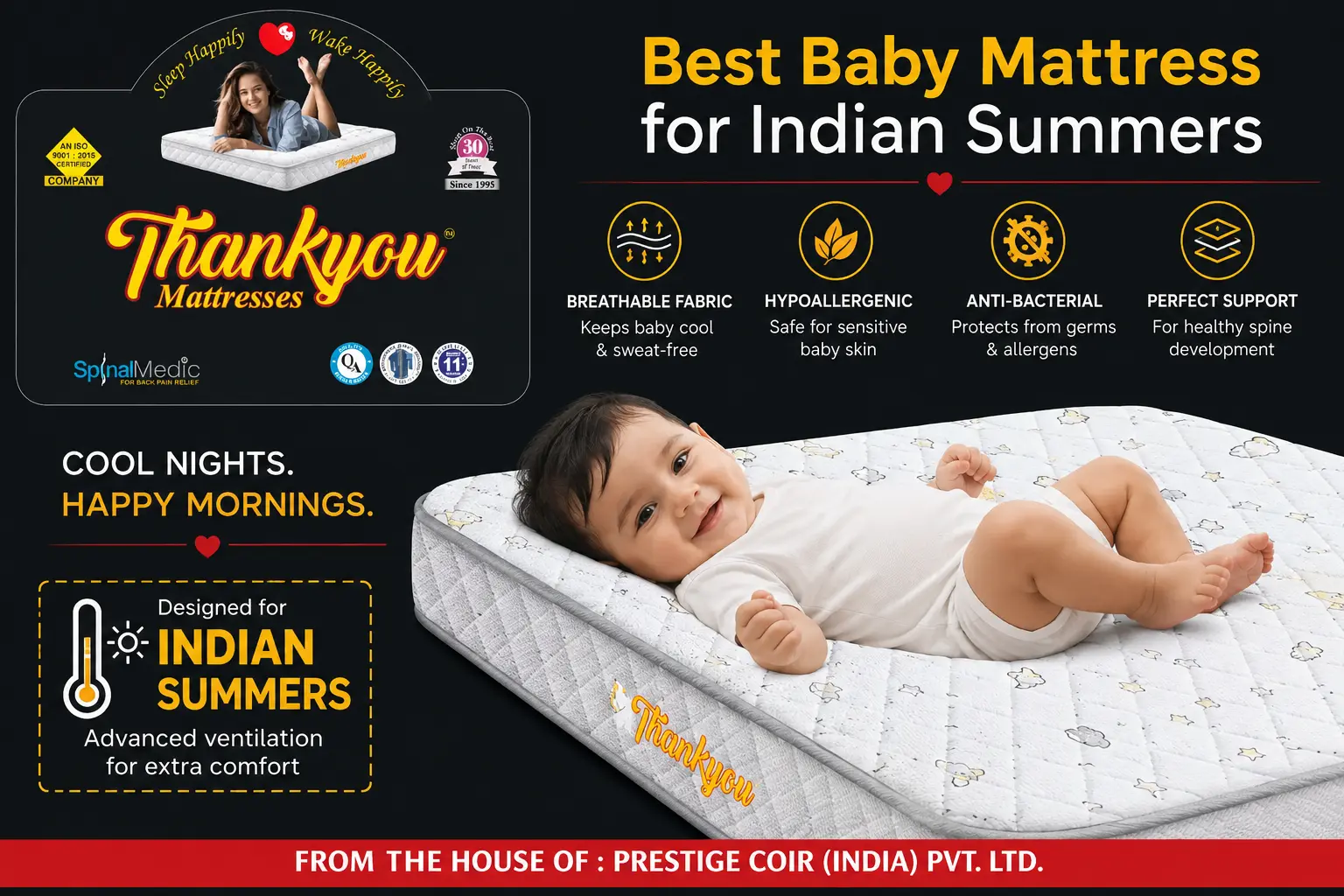
  • Best Baby Mattress for Indian Summers

    Best Baby Mattress for Indian Summers

    The Indian summer months are nothing to joke about — scorching weather, humid surroundings, and sleepless nights will not be easy even for the grown-ups, leave alone babies and toddlers. If it concerns sleeping habits of your child, then selecting a mattress which is suitable for him/her in this season will make a lot of difference.

    This is what you need to know about your choice of baby mattress.

    Why Indian Summers Demand a Special Kind of Baby Mattress

    Whereas temperate areas experience moderate climatic conditions throughout the year, the Indian summer lasts from March through July in most parts of the country. The skin of a baby is much more delicate than that of an adult; overheating during sleep may cause:

    • Prickly heat and skin rashes
    • Disturbed sleeping cycles
    • Overheating and dehydration
    • Heat exhaustion, in some cases

    The reason why the choice of your baby mattress becomes extremely critical during this time of the year.

    Key Features to Look for in a Baby Mattress for Summer

    1. Breathability and Air Circulation

    Your baby mattress should allow air to pass freely into the mattress. This means the mattress should have a breathable cover and be made from materials such as open cell foams or be designed with a perforated core in the mattress.

    2. Firmness — Safety First

    Paediatric guidelines consistently recommend a firm sleeping surface for infants. A firm mattress reduces the risk of suffocation and supports the natural development of the spine. Avoid overly soft or plush surfaces, especially for babies under 12 months. The mattress should spring back immediately when pressure is released.

    3. Hypoallergenic and Non-Toxic Materials

    Indian summers, therefore, are accompanied by more dust and pollution as well. A mattress made out of hypoallergenic material helps prevent the presence of any allergens, dust mites, and bacteria. Go for mattresses that do not contain any hazardous chemicals such as formaldehyde, phthalates, and heavy metals.

    4. Moisture-Resistant and Washable Cover

    Babies sweat and leak — that is simply a fact of parenthood. A mattress with a moisture-resistant or waterproof cover protects the inner core from sweat, spills, and bacteria during humid months. A removable, machine-washable cover is a massive practical advantage.

    5. The Right Size and Weight

    Make sure the mattress fits snugly in the crib or cot with no gaps on any side. Gaps can be a safety hazard. A lightweight mattress is also easier to flip, air out, and clean — which you will want to do frequently in summer.

    Types of Mattresses Suitable for Summer Babies

    Not all foam types behave the same way in heat. Here is a quick breakdown:

    • High-Resilience (HR) Foam Mattresses: Excellent breathability, firm support, and durability. Highly suitable for summer conditions.
    • Coir (Coconut Fibre) Mattresses: A traditional Indian choice that remains naturally cool and firm. Good for summer but can be rough — ideally paired with a soft, breathable cover.
    • Memory Foam (with caution): Regular memory foam tends to retain heat. However, an open-cell or gel-infused memory foam variant can offer pressure relief without trapping warmth. In fact, the same technology behind a well-designed contour memory foam pillow — which distributes pressure and regulates temperature — is now being applied to sleep surfaces for better comfort across all ages.

    Innerspring or latex mattresses are generally considered safer for older toddlers rather than newborns.

    What Makes Thankyou Mattresses a Considered Choice for Parents

    In their search for mattresses for their babies, parents in India generally look for products that offer a combination of good manufacturing quality as well as taking into account the Indian climate. This is precisely where a product line by a renowned mattress manufacturer in Delhi, Thankyou Mattresses, offers its services.

    Thankyou Mattresses pays close attention to the open cell construction technology while creating foams, thus ensuring adequate ventilation – something especially important in hot and humid climates for products designed for infants’ sleep. The quality of the materials used is also another advantage for parents to consider.

    Given that it is based in Delhi, the Thankyou Mattresses company has firsthand experience with the extreme North Indian summer climate.

    Practical Summer Tips for Baby Mattress Care

    The most high-quality mattress can only function effectively if it is provided proper maintenance and environment:

    • Ventilate the mattress once a week by keeping it beside a window or any other ventilated place.
    • In the summer, use a thin and cotton mattress protector as opposed to thick and synthetic mattress protectors.
    • Avoid plastic covers directly against the mattress — they trap heat
    • Ensure ventilation of the room using fans and light air conditioners with room temperature of 22–25°C being the perfect temperature for babies’ sleep.
    • Clean the surface of the mattress using a moist disinfected cloth.

    Final Thoughts

    Quality sleep plays an essential role in the development of infants. Considering that temperatures in such a country as India are always over 40°C during the summer season, it becomes clear why purchasing the right baby mattress is not luxury but necessity.

    Frequently Asked Questions (FAQs)

    1. What type of mattress is best for a baby in Indian summer?

    A firm, breathable mattress made from HR foam or coir with an open-cell structure is best for Indian summers, as it allows heat to escape and keeps your baby cool during sleep.

    1. Is memory foam safe for babies during hot weather?

    Standard memory foam can trap heat, making it less ideal in summer. However, open-cell or gel-infused memory foam variants are designed for better airflow and can be used safely, provided the mattress is also firm enough for infant safety.

    1. How firm should a baby mattress be?

    A baby mattress should be firm enough that it does not visibly sag or conform to your hand when pressed. It should return to its original shape immediately — this firmness is critical to prevent suffocation risk in infants.

    1. How often should I clean a baby mattress during summer?

    During summer, wipe the mattress surface with a mild disinfectant cloth at least once a week and air it out in a well-ventilated space every 7–10 days to prevent sweat, moisture, and bacterial build-up.

    1. What is the ideal room temperature for a baby to sleep in summer?

    Paediatric experts recommend keeping the room temperature between 22°C and 25°C for infant sleep. Avoid placing the crib directly under an AC vent or fan to prevent chilling.

    1. Can I use a waterproof mattress cover for my baby in summer?

    Yes, but choose a breathable, cotton-backed waterproof cover rather than a fully plastic one. Plastic covers trap heat and increase sweating; a breathable protector keeps moisture out while still allowing air circulation.

    1. At what age can I switch from a firm baby mattress to a softer one?

    Most experts recommend maintaining a firm sleep surface until at least 12–18 months. After that, a slightly softer but still supportive mattress can be introduced as the child transitions to a toddler bed.

    1. Are coir mattresses good for babies?

    Coir mattresses are naturally firm, breathable, and cool — making them a popular choice for Indian summers. However, they should have a smooth, hypoallergenic cover, as bare coir can be rough on delicate baby skin.

    1. How do I know if a baby mattress is non-toxic?

    Look for certifications such as OEKO-TEX Standard 100 or CertiPUR-US on the product label, or check with the manufacturer about material composition. These certifications confirm the mattress is free from harmful chemicals and safe for infant contact.

    1. What is the difference between a baby mattress and a regular foam mattress?

    A baby mattress is specifically designed to be firmer, lighter, and made from non-toxic, hypoallergenic materials to meet infant safety standards. Regular foam mattresses are built for adult comfort and weight, and may be too soft or made with materials not suitable for babies.

  • 7 Health Benefits of Sleeping on a Pure Cotton Pillow You Didn’t Know About

    7 Health Benefits of Sleeping on a Pure Cotton Pillow You Didn’t Know About

    Your pillow does a lot more than just cradle your head at night. The material it’s made of quietly shapes how well you breathe, sweat, sleep — and even how your skin feels in the morning.

    We spend nearly a third of our lives asleep, yet most of us give very little thought to what our face and neck are resting against for all those hours. While mattress firmness and pillow loft get plenty of attention, the fabric covering your pillow is often overlooked — even though it has a direct and measurable effect on your health.

    A pure cotton pillow, made from natural fibres rather than synthetic blends, offers a range of benefits that go well beyond simple comfort. Here’s what the science — and a little common sense — says about why making the switch is worth your while.

    7 Reasons a Pure Cotton Pillow Is Better for Your Health

    01 Superior Breathability
    Cotton fibres are naturally hollow and allow air to circulate freely. This keeps your pillow cool through the night, preventing the heat build-up that disrupts deep sleep stages.
    02 Moisture Management
    Cotton absorbs up to 20% of its weight in moisture without feeling wet. It wicks sweat away from the skin and allows it to evaporate, keeping your face dry and comfortable all night.
    03 Hypoallergenic by Nature
    Organic and tightly woven cotton is naturally resistant to dust mites, mould, and pet dander — the most common indoor allergens. Ideal for those with asthma, eczema, or rhinitis.
    04 Gentler on Skin
    The smooth, soft texture of cotton creates less friction on your face than synthetic fabrics. Less friction means fewer compression wrinkles and reduced irritation for sensitive or acne-prone skin.
    05 Chemical-Free Comfort
    High-quality cotton pillows are free from the off-gassing associated with memory foam fills and synthetic covers, making them a cleaner choice for those sensitive to VOCs or chemical smells.
    06 Durability That Pays Off
    Cotton holds its structural integrity through repeated washing at higher temperatures, allowing thorough sanitisation without degrading the fabric — important for hygiene-conscious sleepers.
    07 Supports Consistent Sleep Temperature
    By regulating surface temperature throughout the night, cotton helps the body maintain its natural circadian rhythm — particularly valuable for children, the elderly, and hot sleepers.

    Why the Right Support Matters As Much As the Cover

    A cotton cover does its best work when the pillow inside is equally well-designed. This is where fill material plays a significant role in neck and spinal health. A contour memory foam pillow with a cotton cover is one of the most effective combinations available today — the foam provides zone-specific support for the cervical spine, while the cotton breathes and stays fresh against your skin.

    Unlike traditional flat pillows, a contour memory foam pillow is shaped to fill the gap between the shoulder and the head when sleeping on your side, and provides a lower profile for back sleepers. Paired with a pure cotton cover, it addresses both structural support and surface comfort in one product.

    If you’ve been dealing with neck stiffness, interrupted sleep from overheating, or morning skin irritation, switching to a breathable cotton-covered contour pillow may address several concerns at once — without requiring changes to anything else in your routine.

    What About Babies and Young Children?

    Parents choosing a baby mattress rightly pay close attention to materials — firmness for safe sleep positions, waterproofing for hygiene, and chemical safety for delicate skin. The same logic applies to pillow covers. Cotton’s breathability and low-allergen properties make it particularly suitable for young children, whose skin and respiratory systems are more sensitive to synthetic materials and trapped moisture.

    For children transitioning from a crib to a toddler or junior bed, a cotton-covered, appropriately sized pillow ensures continuity of the safe, breathable sleep environment a quality baby mattress was designed to provide from the start.

    How to Care for a Cotton Pillow

    One of cotton’s most underappreciated advantages is how easy it is to clean. Cotton pillowcases and covers tolerate warm or hot machine washes, which are effective at killing dust mites and removing allergen build-up. Aim to wash your pillowcase at least once a week and the pillow itself every three to six months. A well-maintained cotton pillow can last several years without losing its hygiene or structural integrity.

    Making a Considered Choice

    Sleep quality is the foundation of physical and mental wellbeing — and the materials surrounding you while you sleep are not trivial. A pure cotton pillow is not a luxury upgrade; it’s a sensible, science-backed choice that addresses temperature regulation, allergen control, skin health, and ease of maintenance all at once.

    At Thankyou Mattresses, the emphasis on thoughtfully chosen materials extends from mattresses to sleep accessories — because every layer of your sleep environment works together. Whether you’re pairing cotton with a contour memory foam pillow for better neck support or simply replacing an old synthetic cover, the investment in natural materials is one that pays out quietly, every single night.


    Frequently Asked Questions

    Q1 Is a pure cotton pillow better than a synthetic one for sleep?
    Yes — cotton’s natural breathability and moisture-wicking properties keep the sleep surface cooler and drier, which promotes deeper, less interrupted sleep compared to most synthetic alternatives.
    Q2 Can a cotton pillow help with skin issues like acne or eczema?
    Cotton’s soft texture reduces friction on the face and its breathability minimises moisture build-up, both of which help reduce irritation — making it a gentler choice for sensitive or acne-prone skin.
    Q3 Are cotton pillows hypoallergenic?
    Tightly woven, organic cotton naturally resists dust mites and mould growth, making it one of the better choices for people with allergies, asthma, or hay fever.
    Q4 What is a contour memory foam pillow and who should use it?
    A contour memory foam pillow has an ergonomically shaped profile that supports the natural curve of the neck. It’s particularly beneficial for side sleepers and those with chronic neck or shoulder pain.
    Q5 How often should I wash a cotton pillow?
    Wash your cotton pillowcase at least once a week. The pillow itself should be washed every three to six months at a warm temperature to effectively remove allergens and maintain hygiene.
    Q6 Is cotton safe for a baby’s pillow or mattress cover?
    Yes. Cotton is one of the safest materials for infants and toddlers because it is free from harsh chemicals, breathable enough to prevent overheating, and gentle on delicate skin.
    Q7 Do cotton pillows help with night sweats?
    Cotton’s moisture-wicking capability absorbs perspiration and allows it to evaporate quickly, keeping the sleep surface drier and more comfortable for people who experience night sweats.
    Q8 What is the difference between a cotton pillowcase and a pure cotton pillow?
    A cotton pillowcase is just the cover; a pure cotton pillow refers to one with a cotton fill or outer shell. The greatest health benefits come from the cover in contact with your skin, but cotton fill also adds breathability.
    Q9 Can the right pillow really improve sleep quality?
    Yes — a pillow that keeps you cool, supports spinal alignment, and doesn’t trigger allergies directly reduces the micro-awakenings that fragment sleep and leave you feeling unrested in the morning.
    Q10 How long does a good quality cotton pillow last?
    With regular washing and proper care, a quality cotton pillow typically lasts two to three years before losing loft and support. Replacing it at that point helps maintain both comfort and hygiene.
  • Why a Contour Memory Foam Pillow Is Ideal for People with Cervical Pain

    Why a Contour Memory Foam Pillow Is Ideal for People with Cervical Pain

    Waking up to stiffness in your neck or the sensation of a dull ache in the back of your head not only brings discomfort but also sends signals to your spine that it needs more attention when asleep.

    One of the most common forms of pain in today’s world is cervical pain, which targets the neck and the upper region of the spine. Cervical pain can be caused by spending extended periods in an office setting, excessive screen time throughout the day, and poor sleeping posture. In the quest for the right mattress, people tend to neglect the significance of purchasing the ideal pillow for themselves. Contour memory foam pillows have revolutionized the lives of people dealing with neck pains while asleep.

    Nature of Cervical Pain and Relation to Sleep

    There are seven vertebrae in the cervical spine that have the task of bearing your head’s weight, amounting to 4-5 kilograms. While sleeping, should your pillow not hold the curve of your neck in place, the vertebrae remain unaided throughout the duration. This causes muscle fatigue, pressure on nerves, and continuous pain that accompanies you in your waking hours.

    If the pillow used by a person is completely flat, the head gets elevated excessively, or it sinks too low, leading to spinal misalignment. Here’s why contour pillows make such a difference with their ergonomically designed nature.

    In the cervical spine, the most dangerous time occurs during sleep when muscles become completely relaxed. And this is the only way for the spine to avoid getting out of position.


    Why is a Contour Memory Foam Pillow Different?

    Memory Foam Contour Pillow Features

    First and foremost, a contour memory foam pillow has a special wavy shape, namely it is higher at the edges and lower in the center. The purpose of this design is to support the head comfortably and provide natural alignment of the neck no matter what sleeping position you adopt.

    What makes this pillow unique is its ability to adjust to your neck contours thanks to the properties of memory foam materials used for manufacturing. They respond to temperature and pressure, which is why the shape is always perfect despite repeated usage unlike traditional pillows that flatten over time.

    Why Choose Our Memory Foam Pillow?

    • Spinal alignment – keeps the spine, neck, and head properly aligned through the night
    • Pressure distribution – spreads out head weight, relieving pressure from sensitive areas
    • Motion absorption – prevents any movement interference caused by your partner
    • Durability – memory foam maintains its form much better than conventional fills do
    • Relieved stiffness – continuous support helps prevent muscle tension buildup

    Whom Is a Contour Pillow Designed For?

    Although all users might profit from additional neck support, this particular pillow should be used by:

    • Those suffering from cervical spondylosis and disc problems
    • Individuals experiencing stiff neck, headaches, or shoulder pain upon waking
    •         Side and back sleepers who need their neck curve maintained during rest
    •         Those who spend long hours working at a desk or on screens
    •         Anyone recovering from a neck injury or procedure — consult a doctor first

    Choosing the Right Pillow Requires the Right Mattress Too

    Not everything can be fixed by choosing the proper pillow. If your mattress is not suitable or old, it might affect your overall posture during sleep even though you have selected an ergonomic design pillow. The best sleeping conditions include using both a good pillow and a specialized orthopedic mattress that will support the proper posture of the spine from the lower to the upper parts.

    In fact, the use of an ergonomic contour pillow along with an orthopedic mattress represents the only efficient solution to preventing further damage to the neck.

    Quality Selections: Factors to Consider

    It is important to know that not all memory foam pillows come with similar quality. While choosing the right type for yourself, consider:

    •         Density of foam — medium to high density is ideal
    •         Safety certifications — look for CertiPUR or equivalent foam quality standards
    •         Cover material — a breathable, removable, and washable cover is essential for hygiene
    •         Loft height — ensure the contour profile suits your shoulder width and preferred sleep position
    •         Brand credibility — choose from established manufacturers who follow rigorous quality and testing processes

    Why Thankyou Mattresses Is a Name Worth Trusting

    Thankyou Mattresses stands as one of the trusted mattress manufacturers in Delhi, bringing years of craftsmanship and material science into every product — from thoughtfully designed orthopedic mattresses to purpose-built sleep accessories like the contour memory foam pillow.

    Their pillows are engineered with body-adaptive foam that responds to individual sleep patterns, offering therapeutic support for those dealing with cervical discomfort. Thankyou Mattresses understands that restorative sleep is not a luxury — it is a health necessity — and that philosophy shows in the care that goes into every product they make.

    Final Thoughts

    Neck problems do not need to determine your experience in the morning. If you select a good contour memory foam pillow combined with a good orthopedic mattress, it will significantly decrease your problems. In return, you’ll gain an excellent night’s rest and feel refreshed in the morning.

    In case you’ve been suffering from neck problems, you should consider using a pillow first before going to a doctor. The right support, maintained every single night, is one of the most powerful tools your body has for healing itself.

    Sleep is where healing begins. Choose support that your spine can count on — every single night.


    FAQs (Frequently Asked Questions)

    1. What is a contour memory foam pillow?

    A contour memory foam pillow has an ergonomic wavy shape — higher at the edges and lower in the center — designed to support the neck’s natural curve and maintain proper spinal alignment during sleep.

    1. How does a contour pillow help with cervical pain?

    It supports the cervical spine throughout the night, preventing muscle fatigue and nerve pressure that result from poor neck positioning, which significantly reduces morning stiffness and pain.

    1. Is a contour memory foam pillow suitable for all sleeping positions?

    It works best for side and back sleepers, as the contour design naturally cradles the neck curve in both positions, ensuring consistent support throughout the night.

    1. How is memory foam different from regular pillow filling?

    Memory foam responds to body heat and pressure, adapting to your exact neck shape every night. Unlike traditional fillings, it doesn’t flatten over time and maintains its supportive form much longer.

    1. Can a pillow alone fix cervical pain completely?

    A good pillow helps significantly, but pairing it with a quality orthopedic mattress gives the best results, as full spinal alignment from the neck to the lower back requires support from both.

    1. Who should use a contour memory foam pillow?

    It is especially recommended for people with cervical spondylosis, disc problems, frequent headaches, shoulder pain, desk workers, heavy screen users, and those recovering from neck injuries.

    1. What should I look for when buying a contour memory foam pillow?

    Key factors include foam density, safety certifications like CertiPUR, breathable and washable cover material, appropriate loft height for your shoulder width, and the manufacturer’s credibility.

    1. How does sleeping posture affect cervical health?

    During sleep, neck muscles fully relax, making proper support critical. Without it, the cervical vertebrae lose alignment, leading to muscle fatigue, nerve compression, and persistent pain during waking hours.

    1. Is a contour pillow good for people who work long hours at a desk?

    Yes — desk workers and heavy screen users are highly prone to cervical strain, and using a contour pillow nightly helps counter the damage caused by prolonged poor posture during the day.

    1. How long does a memory foam contour pillow typically last?

    Memory foam is significantly more durable than conventional pillow fills, retaining its shape and supportive properties for several years with proper care and maintenance.

  • 5 Things Every Parent Should Check Before Buying Baby Crib Mattresses

    5 Things Every Parent Should Check Before Buying Baby Crib Mattresses

    For any parent their child are special so, One of the most important choices parents make is what kind of bed to put their newborn in.Because, child sleep a lot during their starting days so, the mattress is very important for their comfort, safety, and healthy growth. There are so many choices on the market that it can be hard to pick the right one.

    Baby crib mattresses that are made well are safe and comfortable for babies. Before buying something, parents should always think about things like how firm it is, what it’s made of, how well it breathes, and how clean it is. This guide lists five important things that all parents should check to make sure their baby sleeps safely and comfortably.

    1. Firmness and Proper Support

    One of the most important things to check in crib mattresses is firmness. Their mattresses must have different from adult mattresses that are often soft and plush, babies require a firmer surface for safe sleep.

    A firm mattress helps:

    • Support the baby’s developing spine
    • Reduce the risk of suffocation
    • Maintain proper sleeping posture

    Soft mattresses may seem comfortable,but they can do many issues. Pediatric sleep experts recommend choosing a mattress that does not sink when the baby lies on it. A firm and supportive structure ensures better spinal alignment and reduces unnecessary pressure on the baby’s body.

    Parents should gently press the mattress surface while shopping. If it quickly regains its shape, it is likely a good option for an infant crib.

    2. Safe and Breathable Materials

    The material used in a baby crib mattresses directly affects comfort, hygiene, and durability. Since babies have sensitive skin and delicate respiratory systems, safe and breathable materials are are best choice to use.

    Good crib mattress materials usually include:

    • High-density foam
    • Natural fibers
    • Breathable fabric covers

    Breathability is important because it helps regulate temperature and prevents overheating during sleep. Babies are very delicate so we have to take care, Babies cannot regulate body heat as effectively as adults, so airflow inside the mattress plays a key role in maintaining a comfortable sleeping environment.

    Parents often pair crib mattresses with soft yet supportive bedding accessories. For example, a pure cotton pillow can be a comfortable option for toddlers as they grow older, thanks to its natural softness and breathability.

    3. Perfect Fit for the Crib

    Another essential factor many parents overlook is the mattress size. A crib mattress must fit perfectly inside the crib frame without leaving gaps on the sides.

    Large gaps can be unsafe because:

    • A baby’s arm or leg may get trapped
    • The baby may roll into the gap while sleeping
    • Bedding may become loose or uneven

    Ideally, there should be minimal space between the mattress and crib edges. If you can easily fit more than two fingers between the mattress and crib frame, mattress can not be of right size. Standard crib mattress dimensions are designed to fit most cribs, but it is always wise to check measurements before buying.

    4. Waterproof and Easy-to-Clean Surface

    Babies can be messy, and mattress hygiene becomes very important during the early months. From diaper leaks to milk spills, crib mattresses will have to be easily cleanable.

    A waterproof or water-resistant mattress cover offers several benefits:

    • Prevents liquid from entering the mattress core
    • Protects against bacteria and odor buildup
    • Makes cleaning faster and easier

    Removable and washable covers are also a good feature to look for. Sleeping surface must have to be clean. It leads to healthy environment and also helps extend the life of the mattress.

    When babies grow into toddlers, parents often start exploring additional comfort options like supportive pillows. Products such as a contour memory foam pillow are designed to provide proper neck and head support for older children and adults.

    5. Durability and Long-Term Comfort

    Parents often assume that baby mattresses are used only for a short period. However, many crib mattresses are designed to last through infancy and toddler years.

    A durable mattress should have:

    • High-quality foam or fiber layers
    • Strong edge support
    • A sturdy outer cover

    Investing in a durable mattress ensures consistent support for your baby as they grow. High-quality construction also prevents sagging, which could otherwise affect sleep comfort and safety.

    Reliable mattress manufacturers focus on quality materials and thoughtful design so that parents can feel confident about their child’s sleep environment. Brands such as Thankyou Mattresses focus on producing best quality mattresses which are comfortable.

    Creating a Comfortable Sleep Environment for Your Baby

    While choosing the right mattress is crucial, parents should also focus on creating a complete sleep environment that supports healthy rest. This includes maintaining a clean crib, using breathable bedding, and keeping the room at a comfortable temperature.

    Some simple tips include:

    • Avoid overloading the crib with toys or pillows
    • Use fitted crib sheets that stay secure
    • Ensure proper ventilation in the room
    • Maintain a consistent sleep routine

    When all these elements work together, babies are more likely to enjoy peaceful and uninterrupted sleep.

    Many parents today prefer trusted brands when selecting sleep products for their families. Companies like Thankyou Mattresses focus on combining comfort and cost together so that you are able to get best quality products at cheap prices.

    Conclusion

    Selecting the right crib mattress is a decision that directly impacts your baby’s comfort and safety. By focusing on key factors such as firmness, breathable materials, proper fit, easy maintenance, and durability, parents can easily make decisions and buy a mattress for their child. High-quality Baby Crib Mattresses are designed with infant safety and comfort in mind, making them an essential part of every nursery. Taking the time to evaluate these five factors will help ensure that your baby sleeps peacefully while receiving the support needed for healthy growth and development.

  • Waterproof vs Non-Waterproof Baby Crib Mattresses: Pros & Cons

    Waterproof vs Non-Waterproof Baby Crib Mattresses: Pros & Cons

    One of the most important decisions for any parent is the selection of the right sleeping surface for the baby. Out of the many options available in the market, Baby Crib Mattresses are available in two variants: waterproof and non-waterproof mattresses. Each of these mattresses has its own advantages and disadvantages, which are discussed in the following paragraphs.

    Why Mattress Choice Matters for Babies

    A baby spends most of their time sleeping, and therefore a mattress is a crucial factor in a baby’s development. Baby Crib Mattresses must provide:

    • Proper support for developing bones 
    • Hygienic sleep environment 
    • Breathability and comfort 
    • Easy maintenance for parents 

    This is why the choice between the two has to be considered well.

    What is a Waterproof Baby Crib Mattress?

    A waterproof baby crib mattress is one that has an additional protective layer that prevents water and other fluids from penetrating the inner layers of the mattress. This layer may be made of vinyl, TPU, or fabrics. 

    Pros of Waterproof Baby Crib Mattresses

    1. Easy to Clean
      Accidents are always possible. With a waterproof mattress, cleaning up after your child is quite easy. You just wipe the mess away. 
    2. Hygienic and Odor-Free
      Since the liquid does not penetrate the mattress, the chances of mold and bacteria growth are minimized. This also means the mattress will not smell. 
    3. Long-Lasting Durability
      The waterproof feature also helps in extending the lifespan of the mattress. 
    4. Ideal for Newborns and Infants
      The first year with your child is always the messiest. With a waterproof mattress, this will not be a problem. 

    Cons of Waterproof Baby Crib Mattresses

    1. Less Breathability
      The waterproof feature may also make the mattress slightly hotter. 
    2. Firm Surface Feel
      The waterproof feature may also make the mattress slightly less soft. 
    3. Potential Noise
      There may also be a slight crinkling noise with some waterproof covers as the child moves around. 

    What is a Non-Waterproof Baby Crib Mattress?

    Non-waterproof mattresses are those that are made of materials that allow for maximum ventilation and are not waterproof. They are more focused on the comfort of the child.

    Pros of Non-Waterproof Baby Crib Mattresses

    1. Better Breathability
      The ventilation is much better. This allows for the child to feel cooler as the temperature is maintained. 
    2. Softer and More Comfortable Feel
      Non-waterproof mattresses are also much softer and more comfortable for the child.
    3. Natural Materials Option
      Some people prefer organic mattresses. Organic mattresses are more common with non-waterproof mattresses. 

    Cons of Non-Waterproof Baby Crib Mattresses

    1. Difficult to Clean
      Liquids may seep into the mattresses. This may not be effective in the long run.
    2. Potential for Bacteria and Mold
      Since non-waterproof mattresses are more prone to moisture retention, bacteria and mold may develop.   
    3. Needs Additional Cover
      You may also have to purchase an additional cover for your child’s mattress.

    Waterproof vs Non-Waterproof: Quick Comparison

    Feature Waterproof Mattress Non-Waterproof Mattress
    Cleaning Very easy Difficult
    Hygiene High Moderate
    Breathability Moderate High
    Comfort Medium High
    Durability Long-lasting Depends on maintenance
    Maintenance Effort Low High

    Which One Should You Choose?

    It all depends on your needs as a parent, so:

    • If you are looking for something low maintenance with better hygiene, you can opt for the waterproof one. 
    • If you are looking for something with better comfort, you can opt for the non-waterproof one. 

    A balanced approach that parents take is using a non-waterproof one with a waterproof cover.

    Additional Comfort Factors to Consider

    When you are purchasing Baby Crib Mattresses, you should not forget the accessories that can give comfort to the entire family.

    1. Pillow Support for Parents

    Parents, in particular, tend to forget about their own comfort, as they are so busy with the new addition to the family, so you can use accessories like the Memory Foam Pillow, which can give comfort to your own neck during the late nights.

    2. Ergonomic Design

    A contour memory foam pillow can give you the comfort you need, especially during the late nights as a new parent.

    Safety Tips When Buying a Baby Crib Mattress

    Safety Tips When Buying a Baby Crib Mattress

    However you choose, you need to keep the following in mind:

    • Make sure the mattress fits the crib. 
    • A firm surface is important so that there is no suffocation. 
    • Avoid using something with soft padding. 
    • Use non-toxic materials. 

    Final Thoughts

    It’s important to understand that both waterproof mattresses and non-waterproof mattresses are useful in their own right, depending on your needs.

    At Thankyou Mattresses, you can find mattresses that are designed with your needs in mind, whether you want a waterproof mattress or a non-waterproof one.

    What’s important is that you are able to give your baby the best sleeping experience, be it waterproof or non-waterproof, in a clean, comfortable, and secure manner.

    Making the right choice today can help you manage your life in the right manner, while your baby grows in the healthiest way possible.


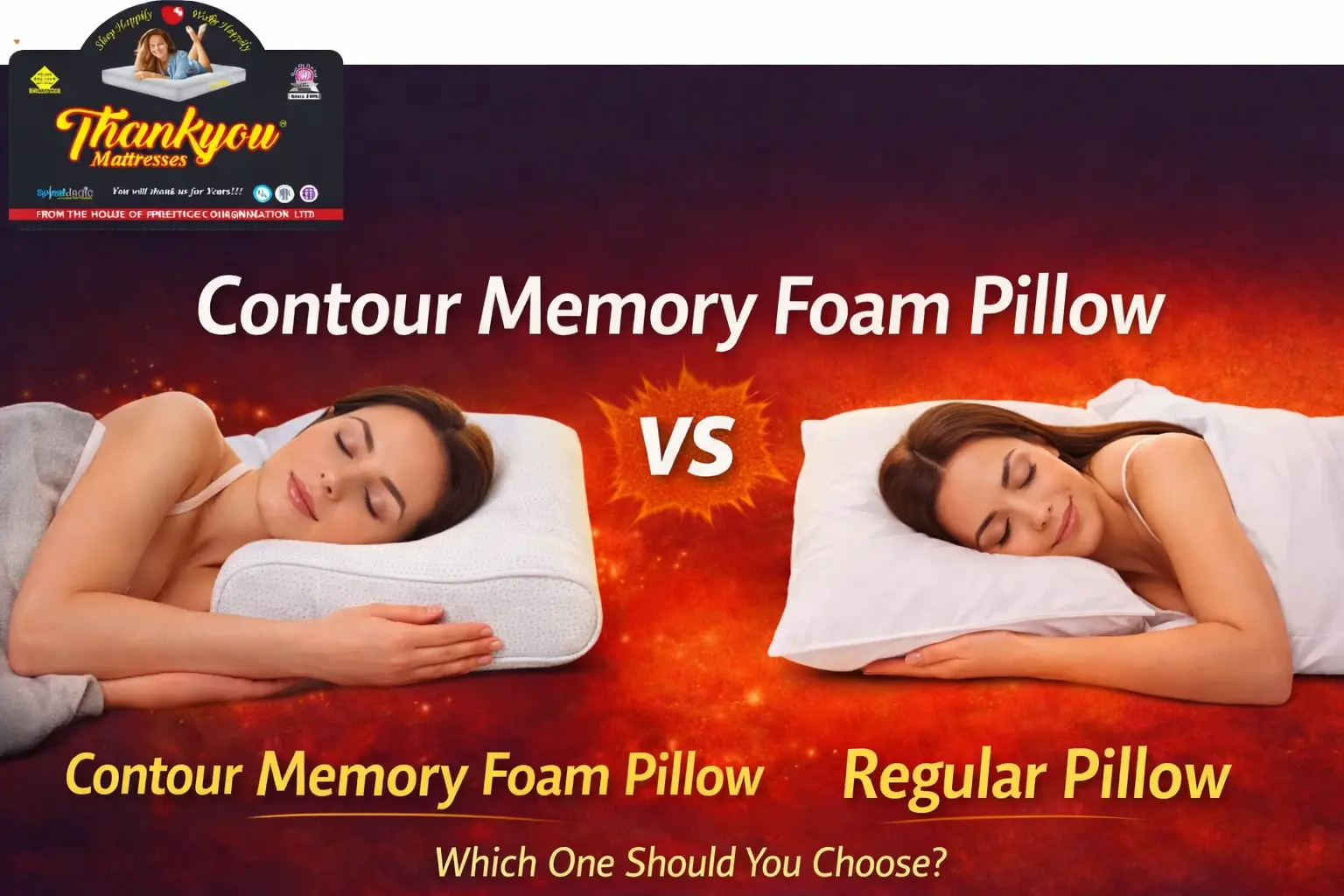
  • Contour Memory Foam Pillow vs Regular Pillow: Which One Should You Choose?

    Contour Memory Foam Pillow vs Regular Pillow: Which One Should You Choose?

    A good night’s sleep is influenced by many factors, including your mattress, sleeping position, and especially the pillow you are using. Many people do not take into consideration the need to choose the best pillow for their comfort. Today, people are trying to compare Contour Memory Foam Pillow with a normal pillow to determine which one is better for their needs.

    There are many advantages to each of these pillows, but the best one for you will depend on your sleeping habits, comfort needs, and health requirements. In this article, we will compare Contour Memory Foam Pillow with a normal pillow to enable you to make a better choice.

    What is a Contour Memory Foam Pillow?

    Contour Memory Foam Pillow is designed to support the natural curves of your neck and spine. The pillow is curved with two raised edges and a lower center to enable you to sleep comfortably.

    The pillow is made of memory foam that molds itself to the shape of your head and neck to ensure you have a comfortable night’s sleep. The design is particularly advantageous to people who experience pain in their necks upon waking up.


    Key Features

    • Ergonomic contour design for neck support

    • Memory foam that adjusts to body shape

    • Helps maintain proper spinal alignment

    • Recommended for back sleepers and side sleepers

    Due to the structured design, this type of pillow helps reduce pressure points while sleeping.

    What is a Regular Pillow?

    A regular pillow is the most commonly used pillow in homes. It has a simple design that is usually rectangular in shape. It is filled with different materials like cotton, fibers, or foam.

    For instance, a pillow filled with pure cotton is a popular choice for many people. This pure cotton pillow is easy to maintain and is available in different sizes and firmness levels.

    Key Features

    • Soft and flexible structure

    • Lightweight and easy to maintain

    • Available in different fillings such as cotton or fiber

    • Recommended for people who like a softer sleeping surface

    However, a regular pillow may not be suitable for providing support for the neck since the filling tends to become irregular over a period of time.

    Major Differences Between Contour Memory Foam Pillow and Regular Pillow

    Understanding the difference between these two pillow options will help you select the most suitable pillow for your needs.

    1. Neck and Spine Support

    One major advantage of a Contour Memory Foam Pillow is that it provides support for the natural curve of the neck. This helps maintain proper spinal alignment.

    The pillows may be comfortable but could eventually get flat, which could affect the level of comfort.

    2. Comfort and Adaptability

    The memory foam pillow conforms to your head and neck, offering you comfort that is tailored to your needs. This makes it suitable for individuals who may be experiencing stiffness during sleep.

    The regular pillows offer comfort but are not adaptable in the same way that memory foam is.

    3. Durability

    The memory foam pillows are able to maintain their shape over a longer period of time compared to other pillows.

    The regular pillows, especially those filled with cotton or other material, may not be able to maintain their shape over time.

    4. Sleeping Position Compatibility

    Sleeping positions are unique in that they offer different levels of comfort.

    • Back sleepers benefit from the pillow’s ability to support the neck’s curvature.

    • Side sleepers are also helped by memory foam pillows.

    • The stomach sleepers need pillows that are flat, which makes them suitable for regular pillows.

    Who Should Choose a Contour Memory Foam Pillow?

    A Contour Memory Foam Pillow is suitable for individuals who:

    • Wake up with neck or shoulder pain

    • Prefer firm and structured support

    • Sleeping on your back or side

    • Want better spinal alignment while sleeping

    The ergonomic design allows for equal distribution of body weight. This can help in improving sleep quality.

    When is a Regular Pillow a Better Option?

    Regular pillows have remained a preferred choice for many people due to their simplicity and softness. 

    You can choose a regular pillow if:

    • Like a softer and more flexible pillow

    • Frequently change sleeping positions

    • Prefer natural fillings such as cotton

    • You want a light and easy-to-wash pillow

    For example, a cotton pillow cover is light and comfortable. It can be a good choice for use in many households. 

    Choosing the Right Pillow for Different Family Needs

    Every member of the family has different sleep requirements. While an ergonomic pillow can be a good choice for adults, infants and toddlers require different kinds of bedding products. 

    For infants, the primary requirements are comfort and safety. There are different kinds of bedding products available in the market. One such product is Baby Crib Mattresses. The mattresses help in maintaining proper posture and provide a safe environment for sleep.

    Choosing the right pillow for different family members can help in improving their comfort and sleep patterns. 

    Tips for Choosing the Best Pillow

    Before choosing a pillow, consider the following factors:

    1. Sleeping Position

    Your sleeping posture should guide your choice of pillow.

    2. Support Level

    People who are experiencing neck pain should look for pillows that offer ergonomic support.

    3. Material Quality

    Breathable and durable materials are a must for a pillow, as they will ensure a longer lifespan of comfort.

    4. Maintenance

    Choose pillows with removable covers or washable materials for better hygiene.

    Conclusion

    Both the Contour Memory Foam Pillow and a regular pillow have their own unique benefits that they can offer to their users. Memory foam pillows are designed for people who need more support for their neck, as they are designed to keep their spine in correct alignment. On the other hand, a regular pillow offers more comfort and simplicity, which many people prefer.

    When choosing a pillow, you must ensure that you are choosing a pillow that will offer you comfort, will be durable, and will offer you a good night’s sleep. Quality Sleep products, like those offered by Thankyou Mattresses, are designed with the purpose of enhancing your comfort while you are asleep.

    If you are able to select a good pillow and bedding products, you will be able to create a healthier and more comfortable environment for yourself and your family.

  • How to Maintain and Increase the Life of Your Double Bed Mattress

    How to Maintain and Increase the Life of Your Double Bed Mattress

    A good mattress is essential for having a peaceful and sound sleep and for maintaining overall well-being. Therefore, it is always recommended to invest in a good quality Double Bed Mattress for comfort and support. However, it is essential to maintain it well in order to extend its life. Many people unknowingly reduce the life of their mattresses due to poor maintenance and placement of the mattresses.

    There are many ways to maintain and extend the life of your mattresses with simple practices. This article provides guidelines for maintaining mattresses for longer periods with better comfort and support.

    Why Mattress Maintenance is Essential

    Double bed mattress is used every day and constantly come in contact with human weight and sweat. Therefore, it is essential to maintain mattresses well in order to avoid compromising comfort and hygiene.

    Mattress maintenance is essential for:

    • Maintaining its shape and structure

    • Improving overall comfort and support

    • Keeping it free of dust mites and allergens

    • Extending its overall life

    • #Protecting Your Investment

    Simple habits can play a significant role in the length of time your mattress will remain comfortable and supportive.

    #### 1. Using a Mattress Protector

    One of the simplest ways to protect your mattress investment is to use a high-quality mattress protector. This protector will work as a barrier against moisture, stains, and dust.

    The advantages of using a mattress protector include:

    • Protection against spills and sweat

    • Reduced buildup of dust and allergens

    • Easier cleaning and maintenance

    • Enhanced mattress hygiene

    A waterproof and breathable protector will be particularly useful if you have children or pets.

    #### 2. Rotating the Mattress

    Eventually, the weight of your body will put pressure on specific parts of the mattress. Rotating the mattress will ensure the pressure is evenly distributed, thus eliminating the chances of the mattress sagging.

    How often should the mattress be rotated?

    • Every 3 to 6 months, depending on the mattress

    • More frequently if two people use the same sleeping position regularly

    Rotating the mattress will ensure that no single area of the mattress experiences constant pressure, thus extending its life and keeping it supportive and comfortable.

    #### 3. Keeping the Mattress Clean

    Dust, allergens, and dirt can build up inside the mattress over time. Thus, cleaning the mattress will be important for its hygiene and longevity.

    Simple cleaning tips:

    • Vacuum cleaning of mattress surfaces once a month

    • Use mild fabric cleaner to remove stains

    • Let it air out occasionally

    • Prevention of excess moisture during cleaning

    Regular cleaning does not only extend the life of the mattress but also creates a healthy sleeping environment.

    4. Ensure Proper Bed Support

    Your mattress should be supported properly on a strong and sturdy bed base. Using a weak base can harm the internal structure of the mattress.

    A good bed base should:

    • Ensure proper weight distribution

    • Use strong and sturdy slats or a solid base

    • Prevention of bending in the middle of the mattress

    Supporting the mattress is one of the most ignored aspects of mattress maintenance.

    5. Avoid Jumping or Excessive Pressure

    Mattresses are meant only for sleeping and not for jumping. Avoid jumping on the mattress and placing heavy objects on one spot.

    To maintain the mattress structure:

    • Avoid jumping and standing on the mattress

    • Distribute weight evenly while sitting

    • Prevent children from making the bed a trampoline

    This will ensure the mattress’s longer lifespan.

    6. Allow Proper Ventilation

    Air circulation must be maintained to ensure the mattress does not accumulate moisture, which could lead to bad odor. The mattress should not be covered at all times.

    Useful habits:

    • Take off the bed sheet and allow the mattress to dry

    • Allow fresh air to circulate by keeping the windows open

    • Do not use plastic covers, which could cause moisture buildup

    Allowing fresh air to circulate will ensure the mattress remains fresh and free from mold and bacteria buildup.

    7. Maintain Other Sleep Accessories

    The comfort of the bed is not the only factor that affects sleep; other bedding accessories must be maintained as well.

    For example:

    When the entire bedding and accessories are well maintained, the mattress will be subjected to minimal pressure and will work well for a longer time.

    8. Handle the Mattress Carefully During Moving

    A mattress could be easily damaged if not handled carefully during moving. Bending the mattress could be detrimental to its inner parts.

    Useful habits:

    • Use a mattress bag or cover when moving

    • Do not fold or bend the mattress sharply

    • Carry it with support from both ends

    Taking care during transportation helps preserve its shape and structure.

    9. Replace Worn-Out Bedding on Time

    Old bedsheets, pillow covers, and protectors may harbor dust and germs. Changing them frequently is a step towards healthy sleeping habits.

    Changing bedding frequently helps to prevent dust from entering the layers of the mattress and keeps it fresh and clean to provide a comfortable sleeping experience.

    Choosing Quality Products Matters

    Maintenance of a mattress is a significant factor in increasing its life, but it is not the only factor. Choosing a quality product is also important to provide a comfortable and healthy sleeping experience. Thankyou Mattresses is a brand that provides a comfortable and healthy sleeping experience with its mattresses.

    A good mattress and regular maintenance can easily provide a healthy sleeping experience for many years without compromising comfort.

    Conclusion

    A mattress is a vital investment in a healthy and comfortable sleeping experience. Simple practices such as using a protector, rotating it regularly, and maintaining its cleanliness can increase a mattress’s life significantly.

    A well-maintained double bed mattress provides a comfortable and healthy sleeping experience for many years. With regular maintenance and a high-quality double bed mattress from Thankyou Mattresses, you can enjoy a healthy and comfortable sleeping experience.