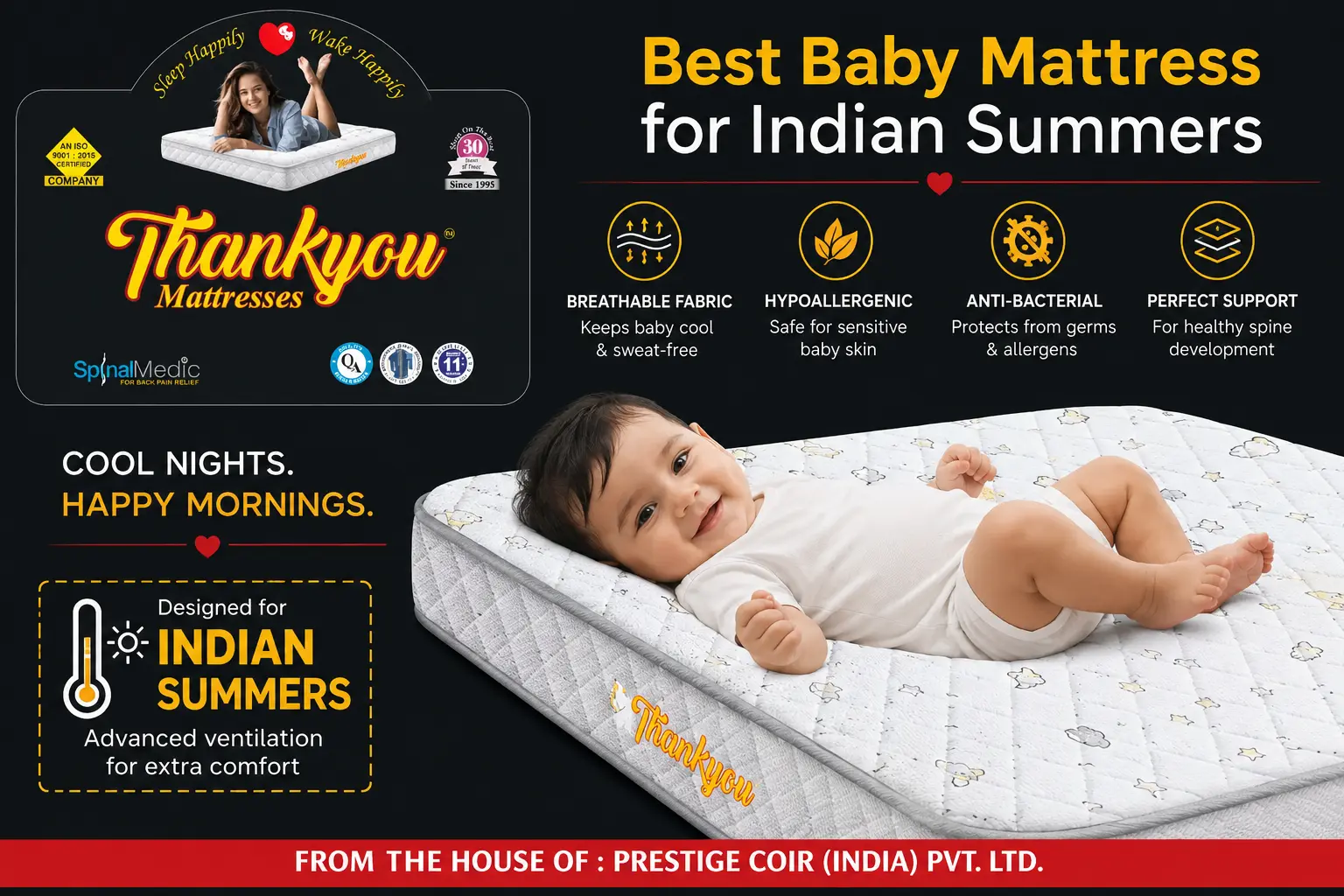
The Indian summer months are nothing to joke about — scorching weather, humid surroundings, and sleepless nights will not be easy even for the grown-ups, leave alone babies and toddlers. If it concerns sleeping habits of your child, then selecting a mattress which is suitable for him/her in this season will make a lot of difference.
This is what you need to know about your choice of baby mattress.
Why Indian Summers Demand a Special Kind of Baby Mattress
Whereas temperate areas experience moderate climatic conditions throughout the year, the Indian summer lasts from March through July in most parts of the country. The skin of a baby is much more delicate than that of an adult; overheating during sleep may cause:
- Prickly heat and skin rashes
- Disturbed sleeping cycles
- Overheating and dehydration
- Heat exhaustion, in some cases
The reason why the choice of your baby mattress becomes extremely critical during this time of the year.
Key Features to Look for in a Baby Mattress for Summer
1. Breathability and Air Circulation
Your baby mattress should allow air to pass freely into the mattress. This means the mattress should have a breathable cover and be made from materials such as open cell foams or be designed with a perforated core in the mattress.
2. Firmness — Safety First
Paediatric guidelines consistently recommend a firm sleeping surface for infants. A firm mattress reduces the risk of suffocation and supports the natural development of the spine. Avoid overly soft or plush surfaces, especially for babies under 12 months. The mattress should spring back immediately when pressure is released.
3. Hypoallergenic and Non-Toxic Materials
Indian summers, therefore, are accompanied by more dust and pollution as well. A mattress made out of hypoallergenic material helps prevent the presence of any allergens, dust mites, and bacteria. Go for mattresses that do not contain any hazardous chemicals such as formaldehyde, phthalates, and heavy metals.
4. Moisture-Resistant and Washable Cover
Babies sweat and leak — that is simply a fact of parenthood. A mattress with a moisture-resistant or waterproof cover protects the inner core from sweat, spills, and bacteria during humid months. A removable, machine-washable cover is a massive practical advantage.
5. The Right Size and Weight
Make sure the mattress fits snugly in the crib or cot with no gaps on any side. Gaps can be a safety hazard. A lightweight mattress is also easier to flip, air out, and clean — which you will want to do frequently in summer.
Types of Mattresses Suitable for Summer Babies
Not all foam types behave the same way in heat. Here is a quick breakdown:
- High-Resilience (HR) Foam Mattresses: Excellent breathability, firm support, and durability. Highly suitable for summer conditions.
- Coir (Coconut Fibre) Mattresses: A traditional Indian choice that remains naturally cool and firm. Good for summer but can be rough — ideally paired with a soft, breathable cover.
- Memory Foam (with caution): Regular memory foam tends to retain heat. However, an open-cell or gel-infused memory foam variant can offer pressure relief without trapping warmth. In fact, the same technology behind a well-designed contour memory foam pillow — which distributes pressure and regulates temperature — is now being applied to sleep surfaces for better comfort across all ages.
Innerspring or latex mattresses are generally considered safer for older toddlers rather than newborns.
What Makes Thankyou Mattresses a Considered Choice for Parents
In their search for mattresses for their babies, parents in India generally look for products that offer a combination of good manufacturing quality as well as taking into account the Indian climate. This is precisely where a product line by a renowned mattress manufacturer in Delhi, Thankyou Mattresses, offers its services.
Thankyou Mattresses pays close attention to the open cell construction technology while creating foams, thus ensuring adequate ventilation – something especially important in hot and humid climates for products designed for infants’ sleep. The quality of the materials used is also another advantage for parents to consider.
Given that it is based in Delhi, the Thankyou Mattresses company has firsthand experience with the extreme North Indian summer climate.
Practical Summer Tips for Baby Mattress Care
The most high-quality mattress can only function effectively if it is provided proper maintenance and environment:
- Ventilate the mattress once a week by keeping it beside a window or any other ventilated place.
- In the summer, use a thin and cotton mattress protector as opposed to thick and synthetic mattress protectors.
- Avoid plastic covers directly against the mattress — they trap heat
- Ensure ventilation of the room using fans and light air conditioners with room temperature of 22–25°C being the perfect temperature for babies’ sleep.
- Clean the surface of the mattress using a moist disinfected cloth.
Final Thoughts
Quality sleep plays an essential role in the development of infants. Considering that temperatures in such a country as India are always over 40°C during the summer season, it becomes clear why purchasing the right baby mattress is not luxury but necessity.
Frequently Asked Questions (FAQs)
- What type of mattress is best for a baby in Indian summer?
A firm, breathable mattress made from HR foam or coir with an open-cell structure is best for Indian summers, as it allows heat to escape and keeps your baby cool during sleep.
- Is memory foam safe for babies during hot weather?
Standard memory foam can trap heat, making it less ideal in summer. However, open-cell or gel-infused memory foam variants are designed for better airflow and can be used safely, provided the mattress is also firm enough for infant safety.
- How firm should a baby mattress be?
A baby mattress should be firm enough that it does not visibly sag or conform to your hand when pressed. It should return to its original shape immediately — this firmness is critical to prevent suffocation risk in infants.
- How often should I clean a baby mattress during summer?
During summer, wipe the mattress surface with a mild disinfectant cloth at least once a week and air it out in a well-ventilated space every 7–10 days to prevent sweat, moisture, and bacterial build-up.
- What is the ideal room temperature for a baby to sleep in summer?
Paediatric experts recommend keeping the room temperature between 22°C and 25°C for infant sleep. Avoid placing the crib directly under an AC vent or fan to prevent chilling.
- Can I use a waterproof mattress cover for my baby in summer?
Yes, but choose a breathable, cotton-backed waterproof cover rather than a fully plastic one. Plastic covers trap heat and increase sweating; a breathable protector keeps moisture out while still allowing air circulation.
- At what age can I switch from a firm baby mattress to a softer one?
Most experts recommend maintaining a firm sleep surface until at least 12–18 months. After that, a slightly softer but still supportive mattress can be introduced as the child transitions to a toddler bed.
- Are coir mattresses good for babies?
Coir mattresses are naturally firm, breathable, and cool — making them a popular choice for Indian summers. However, they should have a smooth, hypoallergenic cover, as bare coir can be rough on delicate baby skin.
- How do I know if a baby mattress is non-toxic?
Look for certifications such as OEKO-TEX Standard 100 or CertiPUR-US on the product label, or check with the manufacturer about material composition. These certifications confirm the mattress is free from harmful chemicals and safe for infant contact.
- What is the difference between a baby mattress and a regular foam mattress?
A baby mattress is specifically designed to be firmer, lighter, and made from non-toxic, hypoallergenic materials to meet infant safety standards. Regular foam mattresses are built for adult comfort and weight, and may be too soft or made with materials not suitable for babies.
Leave a Reply